

There are more solutions than obstacles. Nicolas Zart
Summary for Professionals: As the number of original AAM aircraft shrinks, the industry is seeing a repeat of automotive history: design convergence. With only a few ways to efficiently execute a 5-passenger eVTOL, the battle is no longer just about who can fly, but who owns the proprietary control laws that manage the transition from vertical lift to wing-borne flight.

Is the romance over in advanced air mobility (AAM)?
Are the founder-led public friendships that defined the early concept years of the industry over? Looking at the landscape of the past two years, it certainly appears so. We’ve seen Joby Aviation and Archer Aviation embroiled in high-stakes litigious actions over trade secrets and real estate. Today, Archer is turning that same aggressive legal lens toward another AAM pioneer, Vertical Aerospace. The transition from “collaboration for the good of the sector” to “defensive litigation for the good of the share price” signals a tradition evolving of any disruptive technology, that the industry has officially entered its brutal maturity phase.
BRISTOL & SANTA CLARA — The “maturity phase” of the Advanced Air Mobility (AAM) industry is in the litigious era. On February 24, 2026, Archer Aviation (NYSE: ACHR) filed a formal patent infringement complaint in the U.S. District Court for the Eastern District of Texas against UK-based Vertical Aerospace (NYSE: EVTL).
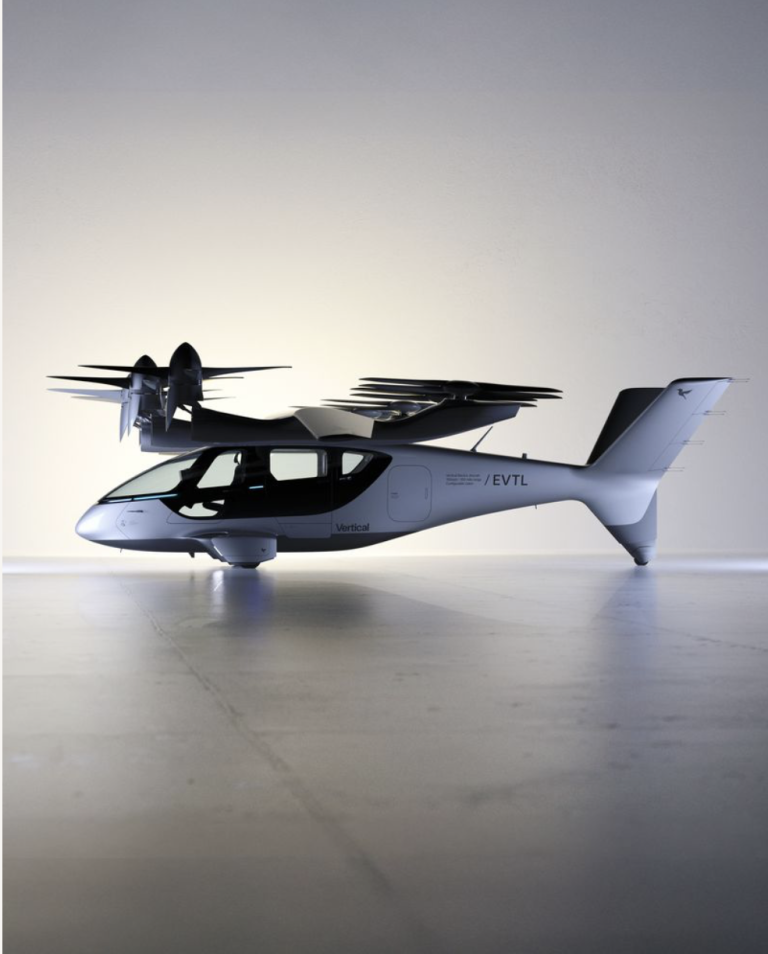
The lawsuit centers on Vertical’s recently unveiled Valo aircraft, which Archer characterizes as a “visual mimic” of its flagship Midnight eVTOL. This legal salvo arrives at a critical juncture for the industry, where engineering solutions for tilt-rotor propulsion are naturally converging, leaving OEMs to fight for the “territory” of proprietary software and industrial design.
The Dispute: Architectural Mimicry vs. Engineering Convergence
Archer alleges that Vertical abandoned its previous VX4 tilt-wing design—which featured eight propellers and a distinct aerodynamic profile—to adopt an architecture that mirrors Midnight. Archer cites two design patents (D1,062,878 and D1,067,164) protecting its V-tail, fuselage, and wing configurations.
The same case can be of the Supernal S-A2 (Hyundai): Unveiled at CES 2024 and matured in 2025, the S-A2 is the closest non-litigant mirror. It adopts a similar sharp-nosed cabin, high-wing, and V-tail. However, Supernal’s uses of 8-tilt rotor setup (4 front/up, 4 rear/down) creates a different “control allocation” signature than Archer’s 12-rotor system.
The same case can also be made for Wisk Aero (Generation 6). It uses 12 rotors, 6-tilt / 6-fixed with a traditional tail. This was the subject of the 2023 settlement between Archer and Boeing-backed Wisk, which effectively drew a line between their respective IP.
And finally, linking back to the first lawsuits, Joby Aviation (S4), while often compared, but architecturally distinct, uses 6 large tilting rotors and a uniform tilt mechanism. Archer’s 12-rotor system is purposefully designed for higher redundancy with smaller, less complex motors.
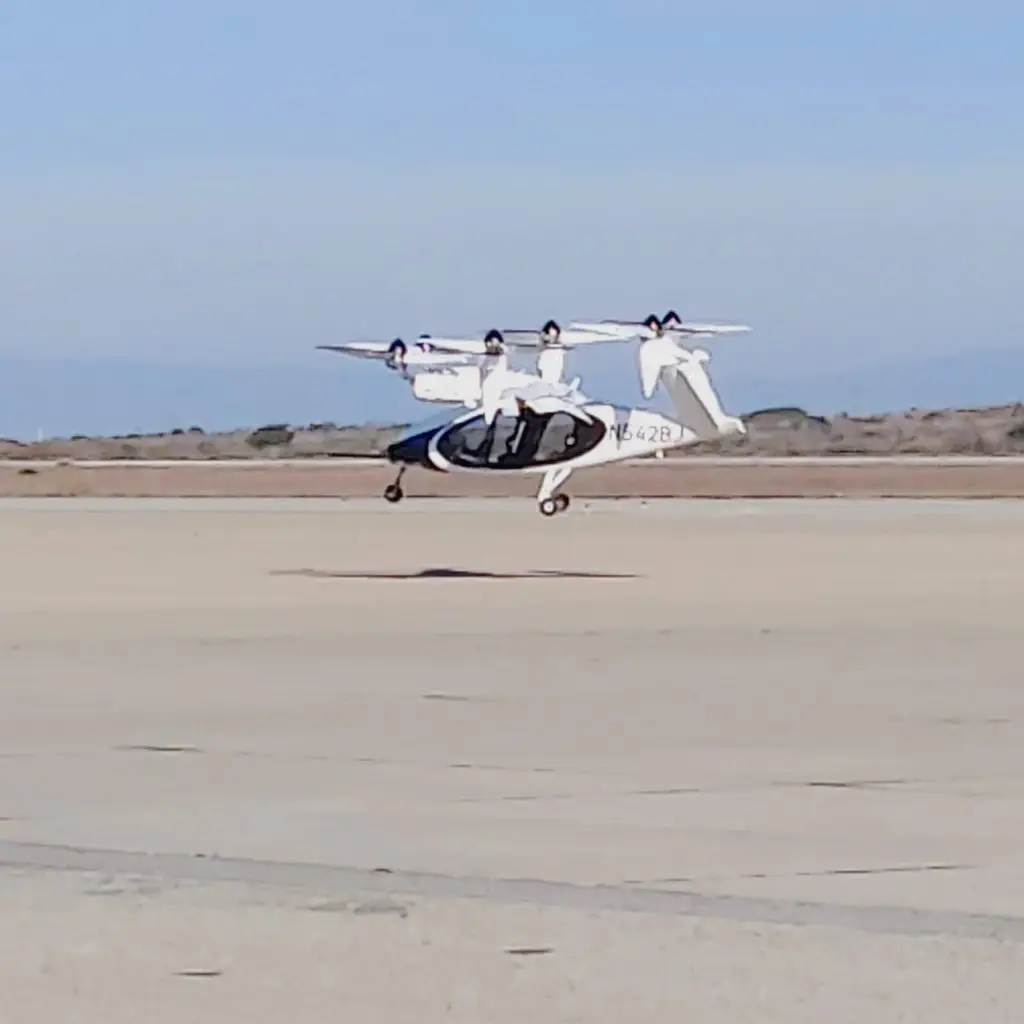
More significantly, the suit targets a utility patent (No. 11,945,597) covering “control allocation” methods. This system manages how thrust and power are distributed across a tilting electric propulsion architecture. Archer claims this technology was exploited after Vertical was granted “unprecedented access” to Archer’s facilities during a collaborative exploration that lacked a traditional NDA, something that has happened previously with other companies.
Comparative Technical Specifications: Archer Midnight vs. Vertical Valo
The table below is an attempt to highlight the “design mimicry” allegations by showing where the two airframes have aligned in 2026, alongside the distinct operational philosophies each OEM maintains.
| Feature | Archer Midnight (US) | Vertical Valo (UK) | Technical/Legal Conflict |
| Configuration | 12 Tilting Rotors (Tilt-Prop) | 8-12 Tilting Rotors | Alleged shift from VX4’s 8-rotor setup. |
| Wing Design | Fixed-wing, High-wing | Redesigned Wing & Boom | Infringement claim on “wing configuration.” |
| Tail Assembly | High-mounted V-Tail | High-mounted V-Tail | Basis of Design Patent D1,062,878. |
| Max Payload | ~1,000 lbs (453 kg) | 1,200 lbs (550 kg) | Vertical claims “largest cargo hold in class.” |
| Seating | Pilot + 4 Passengers | Pilot + 4 (Expandable to 6) | Vertical’s cabin is wider for 3-abreast seating. |
| Max Cruise Speed | 150 mph (241 km/h) | 150 mph (241 km/h) | Identical top-end performance targets. |
| Flight Control | Proprietary G3000-based | Honeywell Anthem + Fly-by-wire | Infringement claim on “Control Allocation.” |
Strategic Benchmarks: Integration vs. Outsource Models
The lawsuit highlights the three distinct strategic pathways currently defining the AAM market:
- Joby Aviation (The Closed-Loop Model): Joby remains the benchmark for vertical integration, manufacturing everything from actuators to motors in-house. Their 2021 trade secret lawsuit against Archer set the precedent for protecting this “integrated” investment.
- Archer Aviation (The Proprietary Core Model): Archer has matured into a hybrid approach. While they use Tier 1 aerospace suppliers for traditional components, they keep propulsion and flight control systems strictly proprietary. This lawsuit is a clear move to prevent their “in-house” software laws from becoming industry-standard by proxy.
- Vertical Aerospace (The Partner-Centric Model): Vertical has traditionally relied on an ecosystem of partners like Rolls-Royce and Honeywell. The shift to the Valo suggests a push toward a more optimized airframe that Archer argues is legally tethered to their own R&D.

The Financial and Operational Context
The litigation coincides with a period of intense pressure for Vertical. Just days before the filing, Raymond James Financial downgraded Vertical to Underperform, citing a “liquidity runway” that may only last through mid-June 2026 without a new industrial partner.
Conversely, Archer is aggressively expanding, recently establishing its UK engineering hub in Bristol—Vertical’s home base—and poaching high-level talent like former Vertical engineering director Dr. Limhi Somerville.
Industry Links:
- AIN Online: Archer Sues eVTOL Rival Vertical for Patent Infringement
- Vertical Mag: Detailed Technical Comparison: Midnight vs. Valo Architecture
- SEC Filing: Vertical Aerospace Official Response to Texas Litigation
- Electric Air Mobility: Who’s First?
- Electric Air Mobility: Archer’s Lilium Bet.