
There are more solutions than obstacles. Nicolas Zart
The revolution didn’t start with Tesla. It started on the tracks over a 100 years ago.
Before electric vertical take-off and landing (eVTOL) aircraft. Before electric vehicles (EV). Before any of the advanced and innovative mobility solutions transformation these past decades we cover on this site — there was electric rail. The first electric locomotive ran in 1879. The first hybrid was in 1938. And by the early 20th century, electrified rail lines were already reshaping how cities moved. The US was the leader in electric rail propulsion, only to drop it in favor of diesel-hybrid solutions. Rail didn’t just pioneer electric mobility. Rail re–invented it.
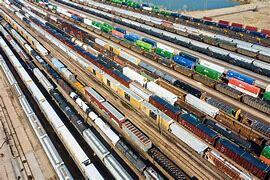
Now, nearly 100 years after mainline electrification became standard practice, the railroad industry is doing what it has always done: quietly, methodically pushing electric propulsion forward — this time with batteries.
MBTA and Maryland Transit: A Joint Leap Forward
The Massachusetts Bay Transportation Authority (MBTA), in coordination with the Maryland Transit Administration (MTA) under a consortium framework, issued a Request for Proposals on February 25, 2026, for new battery-electric and low-emissions locomotives — procurement the MBTA says advances its broader efforts to modernize its rail fleet and position Regional Rail for long-term improvement.

MBTA and MTA are looking to acquire 15 battery-electric locomotives capable of operating under overhead catenary and on battery power, with MBTA procuring 10 for the Providence Line and MTA receiving five to haul Maryland Area Rail Commuter (MARC) services, according to TechCrunch. The RFP also includes 10 Tier 4 diesel locomotives for lines without existing electrification infrastructure, with proposals due June 3 and a contract award planned for summer 2026.
The procurement seeks battery-electric train engines that would run on the Providence Line, which already has overhead power lines for Amtrak’s electric Northeast Corridor trains — allowing the locomotives to draw from catenary on electrified sections and switch to battery power on non-electrified branches.
Why This Matters Beyond the Railroad World
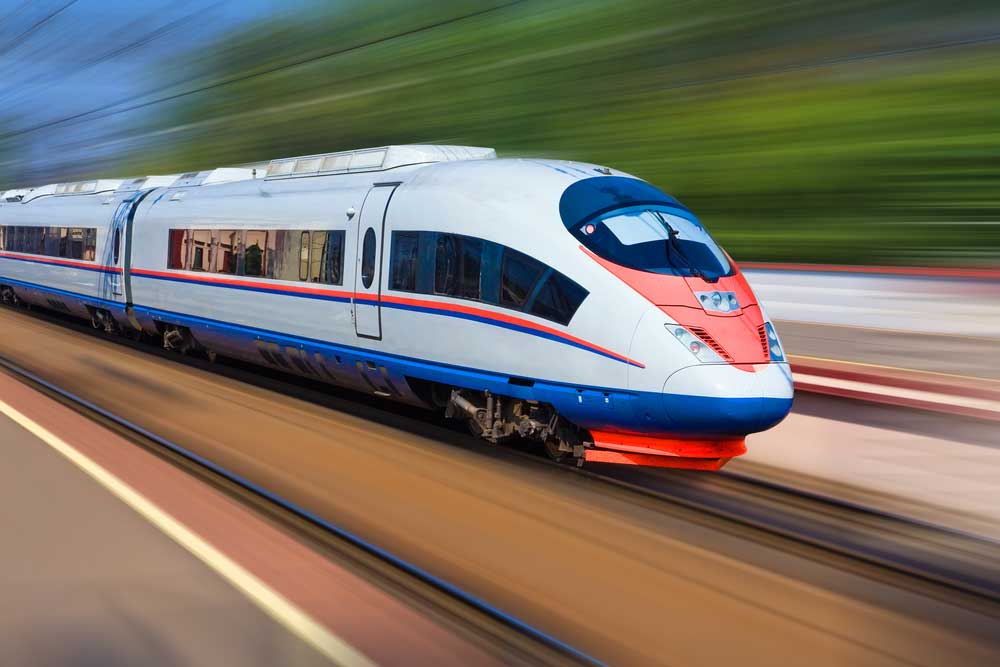
Electric and hybrid locomotives are nothing new. However, the past decades, much research has gone into expanding electric mobility in the railroad industry. AMTRAK has placed orders from Siemens (PDF) for their new AIRO trainsets that combine electric traction with overhead pantographs picking up current from catenaries, as well as battery storage, diesel systems. The specs are intriguing:
- Maximum operational speed:
- Electric mode: 125 mph / 201 km/h
- Diesel mode: 110 mph / 177 km/h
- Battery mode: 60 mph / 96.5 km/h
- Rated power maximum 5,700 hp / 4,250 kW
- Head end power 1000 kW
- Tractive effort (max.) 82,000 lbs. / 365 kN
- Passenger capacity:
- Economy: 286 / 430 seats*
- Business: 49 seats
- Wheelchair lifts: 8 /12*
- Mobility aid spaces: 9 / 11
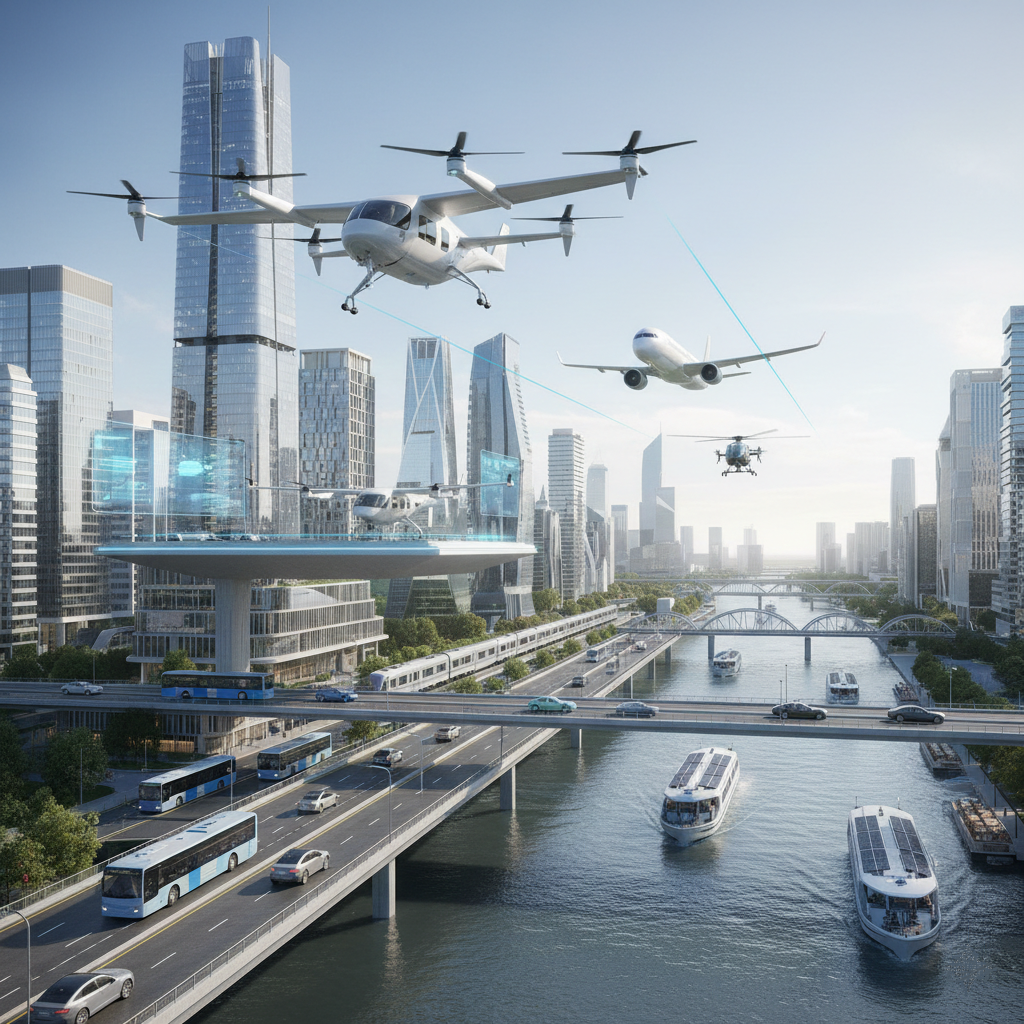
For readers of Electric Air Mobility News, this story lands differently than it would in a general transportation publication. We spend most of our time looking up — at eVTOL, at urban air mobility, at the electrification of the skies. But electric mobility is a single connected story, and rail has been telling it the longest. I have very fond memories of taking trains in Europe. I also enjoy today taking AMTRAK train up and down the Eastern Corridor, preferring to spend a few more hours comfortably working than crammed into airplanes, often time delayed.
Electric trains are usually faster, more reliable, and less polluting than their diesel counterparts — and better service has the knock-on effect of drawing drivers out of their cars, compounding the climate benefits. The same logic applies whether you’re talking about a battery-electric locomotive on the Providence Line or an SD-05 eVTOL operating from a Tokyo rooftop vertiport: electrification improves the system, not just the vehicle.
Battery-electric locomotives produce zero tailpipe emissions and are significantly quieter than traditional diesel trains, improving air quality and reducing noise along rail corridors. Battery-electric locomotives also accelerate faster than diesel trains, supporting smoother trips, more consistent schedules, and the potential for more frequent service on key lines.
Governor Maura Healey framed it plainly: “Battery electric trains mean quicker trips, quieter trains, and more reliable service, especially for the communities that depend on Regional Rail every day.”
The Broader Rail Electrification Wave
MBTA and MTA are not alone. The electrification of American rail is gathering momentum across both passenger and freight sectors.
Union Pacific’s cutting-edge hybrid-battery electric locomotives — built in partnership with ZTR — are on track to complete their pilot in 2026, with the next step being testing in a working rail yard. Depending on mode of operation, the hybrid switchers are expected to consume as much as 80% less fuel.
On the freight side, startups are making bold bets. Voltify, whose VoltCars are essentially sodium-ion batteries on wheels designed to connect to existing freight locomotives, is in active talks with three of North America’s largest railroad companies and is starting a pilot with a Class 1 railroad in early 2026. The financial case is stark: powering locomotives using batteries rather than diesel would save U.S. rail freight companies $94 billion over 20 years, according to a study published in the journal Nature Energy.
The evidence from comparable transitions is already compelling — Caltrain in the San Francisco Bay Area debuted new electric multiple unit trains in 2024, reducing trip time between San Francisco and San Jose by 24 minutes and helping increase the line’s ridership by 57 percent in 2025.
The 100-Year Arc
There is something worth pausing on here. The first practical electric railway opened in Berlin in 1881. By the 1920s and 1930s, major U.S. commuter lines were fully electrified — the Pennsylvania Railroad’s electrification of the Northeast Corridor being among the most ambitious infrastructure projects of its era. Then came the postwar diesel transition, cheap fuel, and decades of under-investment in rail electrification.
What we are watching now is a correction, a catching up to the rest of the world. This is a return, powered by new battery chemistry, new policy urgency, and a generation of engineers and operators who understand that the internal combustion engine was always a detour, not the destination.
The same forces driving eVTOL adoption — decarbonization mandates, urban air quality concerns, the economics of electrification at scale — are driving battery-electric rail. They are the same story told at different altitudes.
What Comes Next
The MBTA’s procurement includes options for up to 50 additional locomotives to support future expansion of Regional Rail modernization, as funding and infrastructure allow. Maryland Transit Administrator Holly Arnold called it “regional partnership in action — strengthening individual transit systems while reinforcing the larger, interconnected transportation network along the Mid-Atlantic and Northeast.”
For the advanced air mobility community, rail’s electric renaissance is a reminder that the future of electric mobility is not a single technology or a single sector. It is a whole-system transformation — on the ground, in the water, and in the air — that has been building for well over a century.
The grandfather of electric mobility is still very much in motion.
Electric Air Mobility News covers the full spectrum of electric mobility — from battery-electric locomotives to eVTOL aircraft. The Ways We Move podcast is available on Apple Podcasts, Spotify, Amazon, iHeart Radio, and Buzzsprout.