
There are more solutions than obstacles. Nicolas Zart
The future of mobility is electric, integrated, and convergent. While platforms like ElectricAirMobility.news began with a focus on advanced air mobility (AAM) innovations, the transition to zero emissions extends far beyond the skies. My experience stretches back to twenmty years ago where it bnegan with electric vehicles (EV), its infrastructure, and startup strategy.
Today, electric maritime and land mobility share the same objectives of decarbonization, efficiency, and urban livability. Together, these modes form a unified ecosystem driving the global shift toward sustainable transportation.

Electric Maritime, Full Steam Ahead
Besides the blatant pun, recently, a landmark development in electric maritime transport highlights this convergence. The Port of Los Angeles is set to become a hub for a fleet of hybrid-electric ship-assist tugboats in a partnership between Arc, the innovative Los Angeles-based electric boat builder, and Curtin Maritime, a leading tug and barge operator. The $160 million contract, with Snow & Co as the shipyard partner, will deliver eight powerful hybrid-electric tugs, the largest commercial deployment of electric workboats in history. The first four tugboats are scheduled for delivery by the end of 2027, signaling a major step forward for marine electrification.
These specialized tugboats are designed for the demanding and intricate work of guiding massive cargo vessels safely into and out of port. Each tug carries over 4,000 horsepower of electric propulsion energy, powered by about 6 megawatt-hours (MW/hr) of batteries. This capacity is matched to the typical operational demands of harbor assist with a bollard pull close to 60 tonnes. The hybrid configuration includes a smaller diesel generator for backup and to extended the range of the vessel. However, the system prioritizes electric operation and is designed to integrate closely with megawatt-class shore charging infrastructure at the port.
Arc’s Hybrid-Electric Tugboats
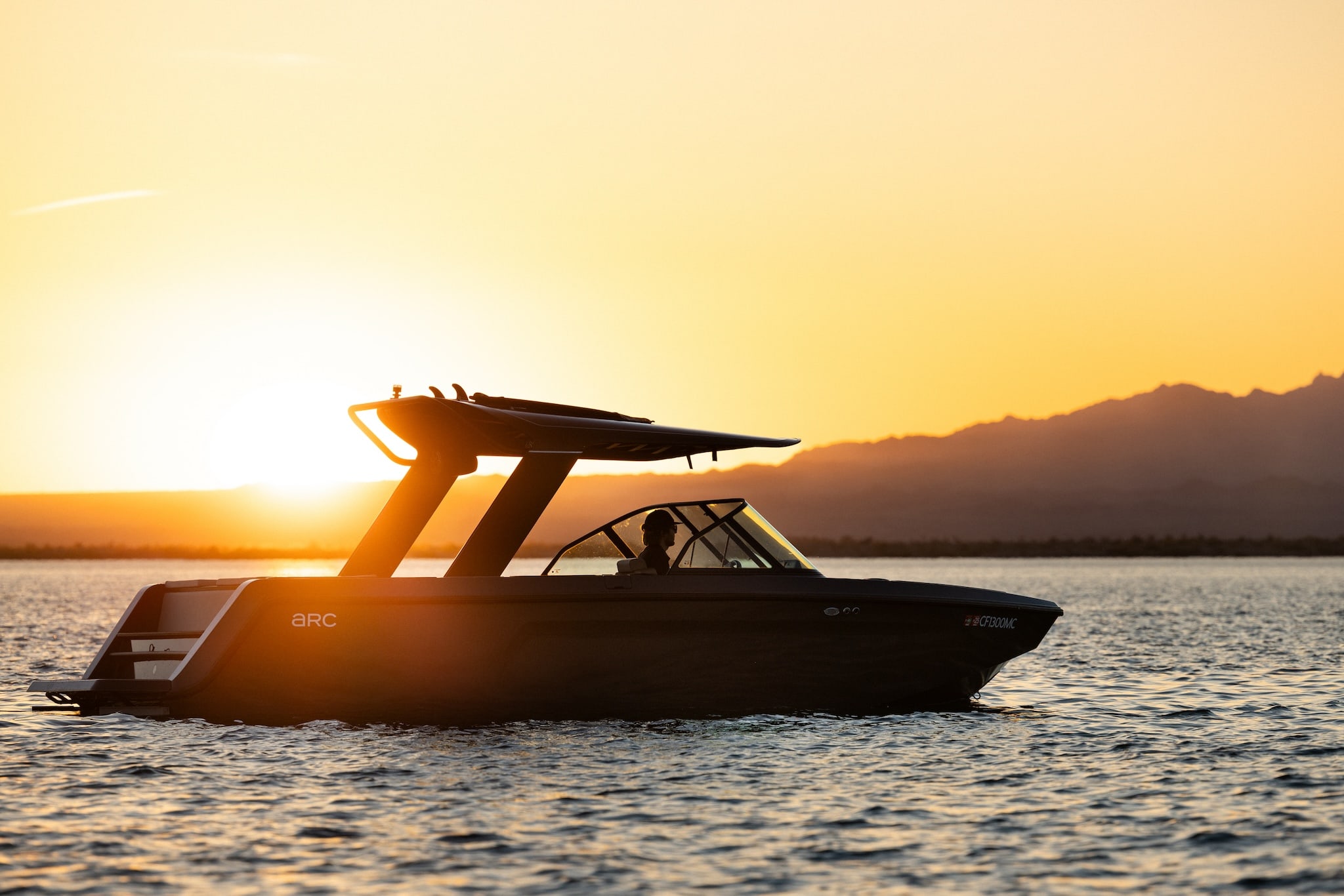
Arc, the Los Angeles-based electric boat manufacturer, was founded in 2021 by a team including former SpaceX engineers. Focused on electrifying the marine industry, Arc designs and builds high-performance electric boats and even a wake-boat. the company is an example of vertical integration, custom battery packs, and in-house manufactured powertrains. It has rapidly grown, secured over $100 million in funding, and recently expanded into commercial electric workboats with innovative hybrid-electric tugboats.
Arc’s hybrid-electric tugboats are not a pilot project or a subsidy-based demonstration. Their electric-first propulsion delivers the obvious instant torque needed for precision controls tugboats demand. This critical for maneuvers feature guides ships safely near docks and other tricky manouvers. Of course, electric propulsion means substantial reductions in emissions, operating costs, and maintenance burdens. Less diesel combustion means cleaner air around port neighborhoods, a crucial benefit given the health and environmental impacts of traditional diesel-powered tugboats, some of the most polluting vehicles by linear foot. It estimated that kindergarten school near port highways report higher-than-usual cases of asthma.
Retofitting Tugs to Electricity
Arc’s electric workboat technology will be initially proven as a tug retrofit with Diversified Marine in Los Angeles. The current expansion from one retrofit vessel to a series of eight brand-new hybrid tugs demonstrates growing commercial confidence and a scaling blueprint for electric maritime fleets, itself like with aviation a notoriously conservative industry.

The market for tugboats and related commercial workboats is substantial—estimated at over $1.2 billion in 2025 and expected to nearly double by 2032—with thousands of vessels operating in US ports alone.
Arc’s CEO Mitch Lee highlights a transformational shift underway. Modern tugs work in tight operational windows, performing frequent short runs, returning repeatedly to port where shore power is accessible. This operational rhythm dovetails perfectly with battery electric propulsion, allowing rapid shore recharge during downtime. Beyond performance, the electric design frees valuable onboard space previously consumed by bulky diesel engines and exhaust systems, improving crew comfort and safety.
The Maritime Sector Is Electrifying
Across the maritime sector, similar electric propulsion advances are in play. Sanmar and Robert Allan Ltd. have introduced ElectRA-series battery tugs in Canada, Türkiye, and Europe with competitive power and range. Crowley’s eWolf in San Diego mirrors this move with a 6.2 MW/hr battery system, significantly cutting nitrogen oxides, particulate matter, and carbon emissions over its operational lifespan.
Electric Innovative Mobility Convergence
This seamless integration of electric maritime solutions complements parallel advancements in electric aviation and land mobility. While ElectricAirMobility.news focuses historically on making AAM a commercial reality, it’s critical to recognize that AAM is wide and inclusive ecosystemic ranging from EVs, autonomous cars, public transportation, rail, and maritime when nearby. Electric maritime vessels such as tugboats are cleaner, quieter, more efficient, ideal for port operations. These vessels support cargo ship movement, just as land-based electrification of buses, trucks, and personal vehicles transforms urban transport dynamics.

By covering the full spectrum of electric mobility—including air, maritime, and land—we provide a comprehensive vision of a cleaner, more connected transportation future. This approach aligns with our work over the past twenty years to herald system-wide mobility integration. Multiports become electric mobility and energy hubs, urban centers embrace zero-emission fleets multimodally, and infrastructure investments weave together different modes with shared energy solutions like megawatt-class chargers and clean energy grids.
As a side not, this is not the first dable with electricity the Port of Los Angeles has been part of. Back early 2010s, I was commissioned to film and write a story about how the port had heavily modify a 1960s power yacht to become a plug-in hybrid (PHEV) using jet foils. Sadly, the polarizing mainstream news caught a wind of it and spun this incredible journey into an exercise to bring officials and VIP on tours of the port. It was anything but that, and the entertainment news media world stopped this project dead in the water.
Arc and Curtin Maritime’s $160 million contract marks a tangible shift from exploratory pilot projects to formal procurement and fleet deployment, where electric workboats stand on their economic and environmental merits. It will be interesting to cover the ripple effects from this collaboration and to see how it will catalyze electrification standards across ports in the US and abroad, as well as regulatory compliance, and public health in sensitive harbor communities.
The future of mobility is the convergence of mobility, boats, ships, trucks, planes, and even trains. At ElectricAirMobility.news, we are proud to broaden our scope as the mobility revolution gains momentum on water, land, and in the air.
For detailed reading, see Arc’s announcement here.