
There are more solutions than obstacles. Nicolas Zart
The Advanced Air Mobility (AAM) industry is witnessing a critical shift in how infrastructure gets designed and deployed. It’s getting the attention it rightfully deserves. While vertiports dominated early AAM planning, the industry is evolving toward multiports that integrate multiple aircraft types and transportation modes into financially viable facilities.

Understanding The Basics
A vertiport is essentially a modernized heliport designed specifically for electric vertical takeoff and landing (eVTOL) aircraft. According to the FAA’s vertiport design standards released in 2022 and updated in Engineering Brief 105b, and soon to come 105b, a vertiport is an area of land, water, or structure used to support landing, takeoff, taxiing, parking, and storage of powered-lift aircraft.
The critical difference from traditional heliports involves more than just adding charging stations. eVTOLs typically weigh more than comparable helicopters. They require reinforced vertipads to withstand crash loads safety standards. Most existing heliports cannot accommodate eVTOL operations without significant structural modifications to meet these enhanced safety requirements.
The FAA’s infrastructure guidelines establish specific requirements for vertiport dimensions, load-bearing capacity, lighting and marking systems, charging infrastructure safety standards, and integration with existing airport operations. These standards provide the foundation for safe Advanced Air Mobility operations as the industry moves toward commercial deployment.

The Financial Challenge
AAM infrastructure planning is complicated despite decades of helicopter operations. The business case for standalone vertical-lift facilities remains extraordinarily difficult. The United States has thousands of heliports, but only a handful serve the general public with ticketed passenger service. Of those three public heliports, maybe one barely breaks even financially.
This economic reality explains why the original urban air mobility concept from the 1950s never achieved widespread adoption. Helicopters are expensive to purchase, expensive to maintain, and expensive to operate. Flying five passengers on short urban routes simply never generated sufficient revenue to justify the infrastructure investment and ongoing operational costs.
While electric propulsion promises lower operating costs through cheaper electricity, reduced maintenance requirements, and locally generated power, standalone vertiports face similar financial viability challenges. Building and maintaining facilities that serve only one type of aircraft limits revenue potential and makes cost recovery problematic.
The Multiport Solution
Industry leaders increasingly recognize that financial sustainability requires integrating multiple aircraft types and transportation modes into single facilities, creating what infrastructure experts now call multiports. This is where a multiport combines traditional runways to accommodate conventional aircraft. It adds short runways of 300 to 500 feet for electric short takeoff and landing aircraft (eSTOL). The FAA has had as STOLPort infrastructure AC since the 1970s. The US military has operated STOL ports since the 80s. Within or adjacent to these short runways, multiple vertipads can accommodate two or three eVTOLs simultaneously.
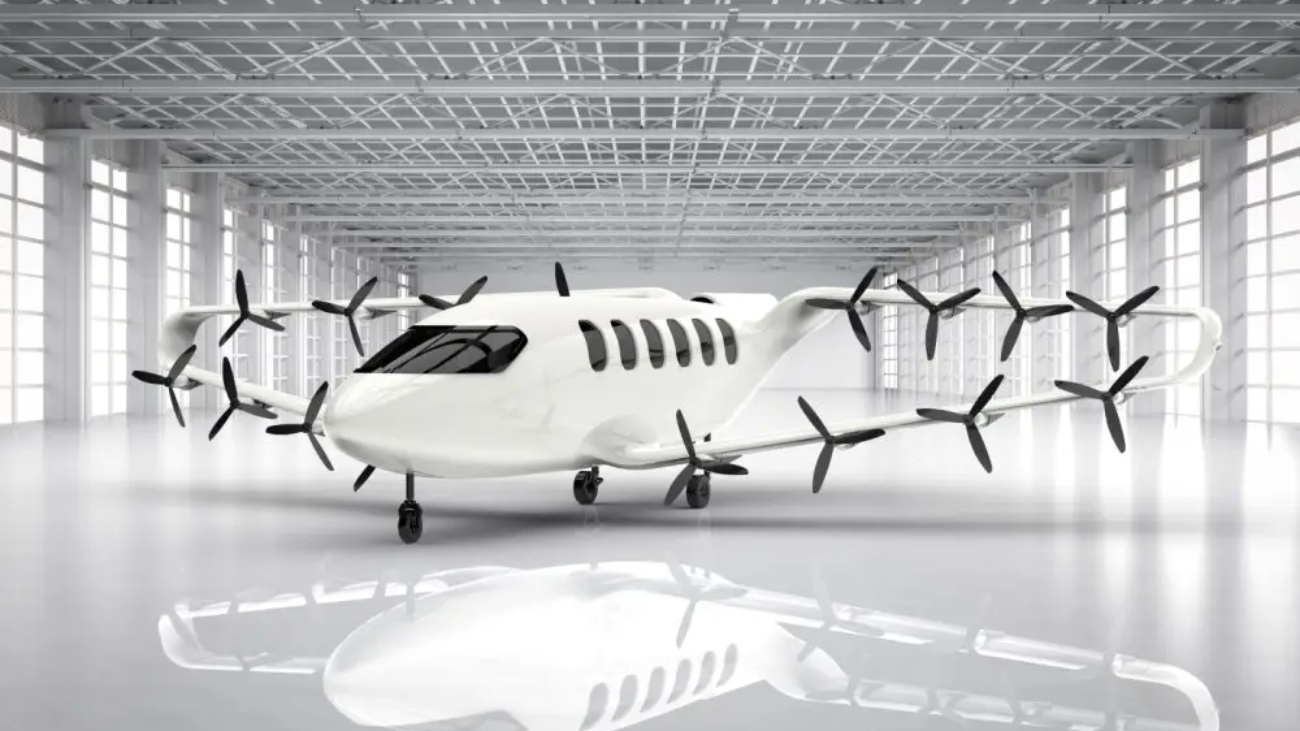
Companies like Electra are demonstrating the viability of eSTOL technology adding to the financial value of eSTOLports. Their hybrid-electric aircraft achieved takeoff in under 170 feet and landing in under 114 feet during 2024 test flights. Using the company’s proprietary blown-lift technology, it directs electric motor-driven airflow over and under wings to increase lift at low speeds. This capability enables access to locations that today only helicopters can reach, but with lower operating costs and noise levels.
Within an eSTOPort, three or more vertipads can be placed. The middle vertipad’s TLOF within a STOLPORT runway holds particular promise for wider transitioning approaches (FATO). Larger eVTOLs studied today to carry 10, 20, or 50 passengers could use this space to transition from forward flight to vertical landing, similar to how helicopters prefer to maintain forward momentum during most of their approach before transitioning to pure hover only in the final feet of descent. Multiple aircraft landing simultaneously on a runway happens regularly at the world’s busiest airport one week of the month, Oshkosh!
Integrated Various Air Operations
Finally, multiports solve the sticky financial equation not met with standalone vertiports. By serving diverse aircraft types and generating revenue from multiple sources, multiports become financially attractive. Electric aircraft, eVTOLs, eSTOLs, and eCTOLs can operate alongside conventional aircraft and helicopters. The infrastructure supports cargo drones, passenger eVTOLs, hybrid-electric regional aircraft, and traditional aviation.
Beyond aircraft operations, multiports can integrate ground transportation including electric vehicle charging for cars and buses, potentially incorporating electric rail connections and even maritime charging for electric boats at waterfront locations. This comprehensive approach to electrified transportation infrastructure spreads development and operational costs across multiple revenue streams.
According to NREL research on vertiport electrical infrastructure, integrating solar panels and battery energy storage systems at these facilities can further reduce operating costs and greenhouse gas emissions while providing grid stability services that generate additional revenue. Of course, solar panels must be placed out of the way of landing and take off approaches for sunlight reflection safety reasons.
Making Sense of the Regulatory Framework
The FAA continues developing performance-based guidance for these integrated facilities. Engineering Brief 105A treats vertiports as a specialized type of heliport with specific requirements for eVTOL operations, including charging infrastructure, enhanced safety areas, and higher-frequency operations than traditional heliports typically experience.
For federally obligated airports, any AAM infrastructure must appear on Airport Layout Plans and receive FAA airspace determinations before construction begins. The FAA’s Electric Integration Pilot Program, announced in 2025, is accelerating development of frameworks and regulations for safe AAM operations through public-private partnerships.
The aviation industry learned from decades of struggling to make standalone helicopter operations financially viable. Pure vertiport concepts repeat these economic challenges. Multiports offer a pragmatic solution by spreading infrastructure costs across multiple aircraft types and transportation modes while creating facilities that can adapt as Advanced Air Mobility technology matures.
The future of AAM infrastructure lies in multiports that acknowledge economic reality while enabling the promise of electric aviation to become commercially viable reality.
RESEARCH SOURCES CITED:
FAA Vertiport Design Standards Press Release
FAA Engineering Brief 105A (Vertiport Design):
FAA Advanced Air Mobility Infrastructure Guidelines
NREL Vertiport Electrical Infrastructure Study (2024)