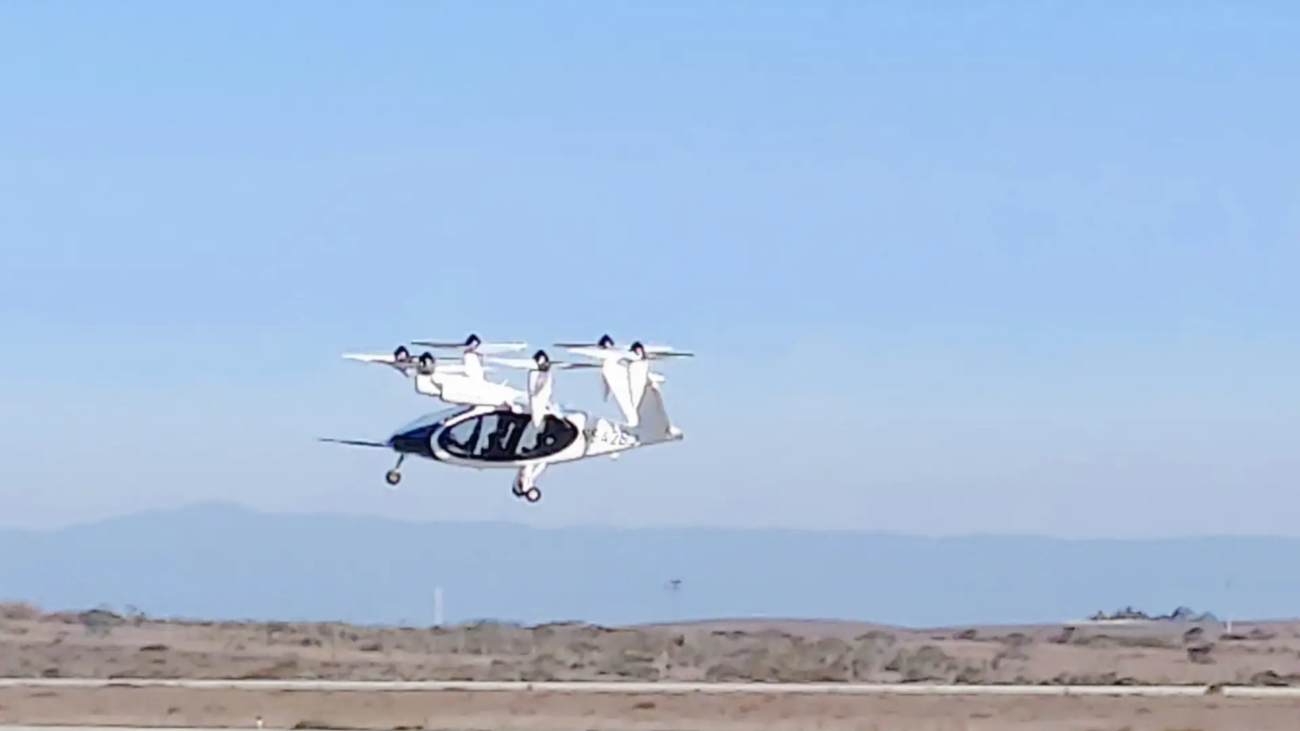
On March 11, 2026, Joby Aviation crossed one of the most significant thresholds in eVTOL history: its first FAA-conforming aircraft took flight at Marina, California, officially entering Stage 5 — the final phase of FAA Type Certification. This is not a prototype. This is the production-intent aircraft that FAA pilots will evaluate before Joby is cleared to carry paying passengers. The finish line is now visible.
SkyDrive Clears Certification Hurdles & Announces US Strategic Alliance
Japan’s SkyDrive has secured agreement with the JCAB on its General Certification Plan for the SD-05 eVTOL, marking one of the most significant milestones yet on the road to type certification and a planned 2028 commercial launch in Japan and the U.S.
SkyDrive Completes Tokyo eVTOL Demos, Eyes U.S. Market
Japan’s leading eVTOL manufacturer just completed its first-ever public flights over Tokyo — testing everything from biometric check-in to compact rooftop vertiport operations. Now SkyDrive is bringing that momentum to Atlanta, where a major U.S. partnership announcement is set for March 9 at Verticon 2026. We’ve been watching SkyDrive for almost a decade.
eVTOL & AAM Week in Review — February 27, 2026
Joby books its first Uber passengers. Germany’s ERC System takes Romeo into the sky. EASA rewrites the rulebook for air taxi pilots. And a UK battery startup just hit a milestone that matters for every eVTOL on the drawing board. Your week in electric air mobility, February 27, 2026.
The Infrastructure Trap: Why Airframes are the AAM Industry’s Most Expensive Distraction
For a decade, the AAM industry has been obsessed with the “what”—the aircraft. But as we enter 2026, the bottleneck isn’t the wingspan; it’s the infrastructure. In this strategic briefing, I detail why I’m pivoting from communications to business intelligence to solve the “Infrastructure Trap.”
News Roundup: Volocopter, Horizon, and Ohio, Intelligently Tackling AAM
From Volocopter’s push into light sport eVTOLs to Horizon’s updated Cavorite X7 and Ohio’s bold eIPP medical transport proposal, advanced air mobility is shifting into practical service. These three stories reveal how regulators, designers, and states are turning new aircraft into real tools for healthcare and regional connectivity.
Electra Patents Hybrid-Electric eVTOL Architecture for Ultra-Short Takeoffs
Electra.aero strengthens its intellectual property with new U.S. patents protecting hybrid-electric blown-lift technology for ultra-short takeoff and landing aircraft. The patents cover flight path control, pilot displays, and battery safety systems critical for commercial certification. Full details inside.
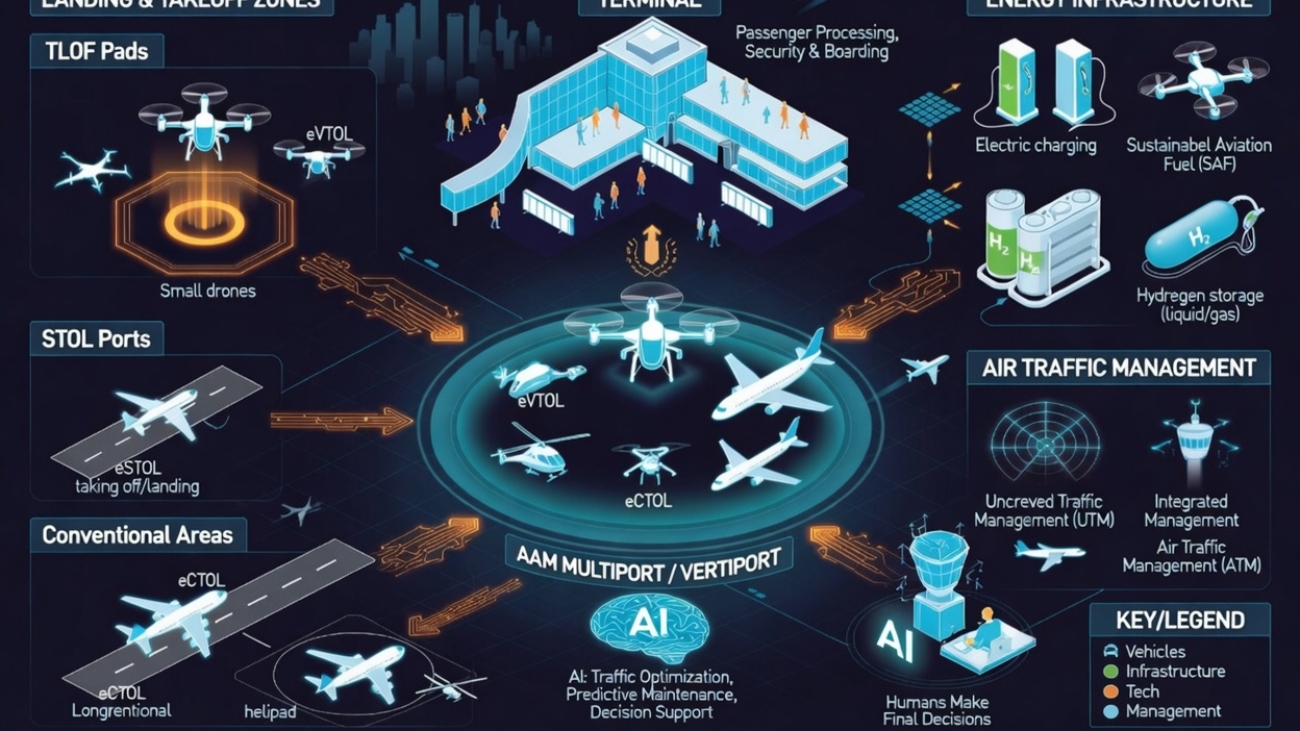
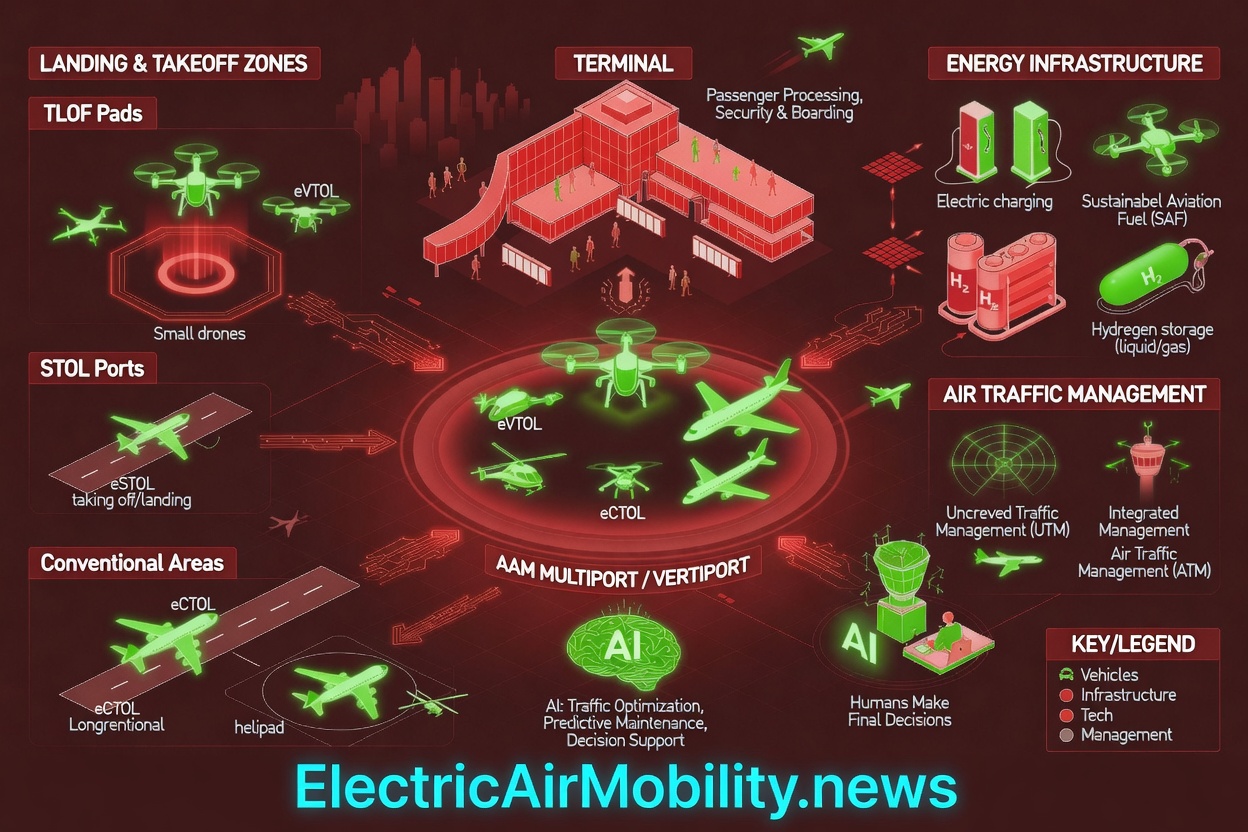
From Vertiports to Multiports: The Evolution of Advanced Air Mobility Infrastructure
The aviation infrastructure landscape is evolving from single-purpose vertiports to multiports that combine eVTOLs, electric short takeoff and landing aircraft, conventional planes, and ground transportation. This integration solves the financial viability challenge that has plagued standalone vertiport concepts.
AutoFlight’s 10 Seat Matrix eVTOL Completes First Public Transition Flight
AutoFlight has completed a public transition flight of its 5 ton class Matrix eVTOL in China. The 10 seat aircraft moves the industry beyond four to six seat designs and pushes Advanced Air Mobility toward higher payloads, cargo operations, and new route economics. We look at what this milestone means for regulators, infrastructure planners, and operators watching the large eVTOL space.
Hawaii is the Ideal AAM Testing Ground
Hawaii is positioning itself for federal eVTOL Integration Pilot Program selection through a partnership combining existing airline operations with electric aircraft technology. Surf Air Mobility, the Hawaii Department of Transportation, and BETA Technologies submitted a joint eIPP application on January 27, leveraging Mokulele Airlines’ position as Hawaii’s largest commuter carrier by scheduled departures. The partnership plans to initially conduct cargo missions between Mokulele’s existing interisland routes using BETA’s ALIA electric aircraft, building on the airline’s 36,000 flights in 2025 averaging 51 miles, ideal for first generation electric aircraft. If selected, the initiative would advance electric aviation through real world regional airline integration rather than theoretical deployment scenarios.