
There are more solutions than obstacles. Nicolas Zart
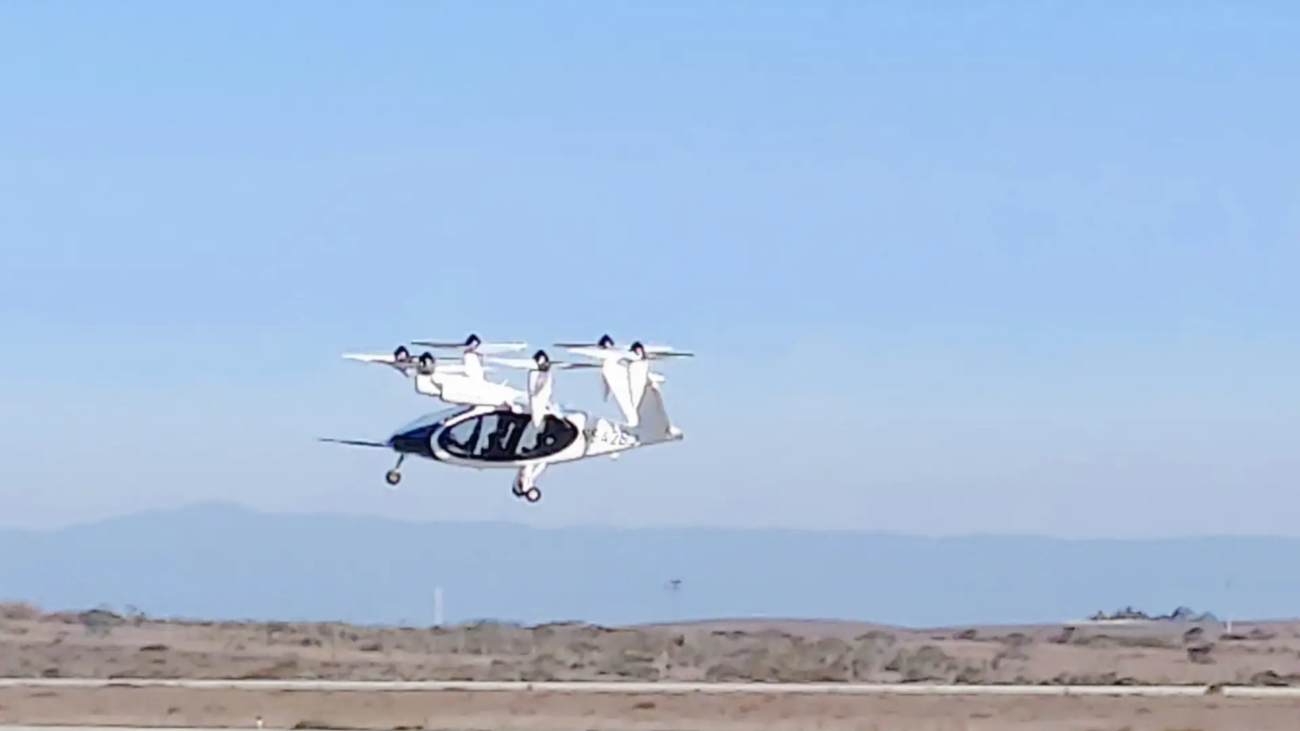
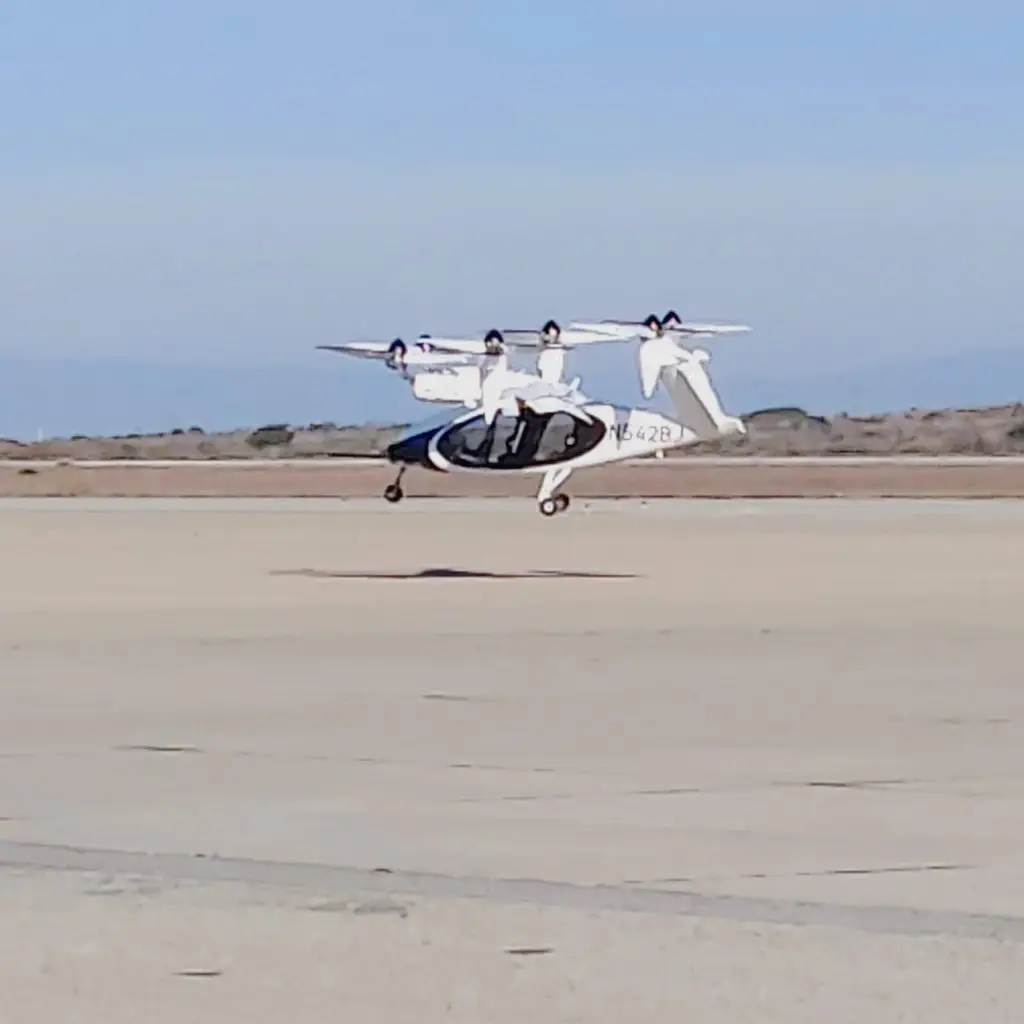
On March 11, 2026, Joby Aviation announced that its first FAA-conforming aircraft had taken flight at the company’s test facility in Marina, California. The aircraft — tail number N547JX — is not a prototype or a demonstrator. It is a production-intent vehicle built to FAA Designated Engineering Representative-approved designs, signed off by FAA Designated Airworthiness Representatives, assembled precisely to Joby’s FAA-approved test plans.

Is finish line is now visible? This flight marks the official entry into Stage 5 of the FAA Type Certification process — the final phase. After close to two decades of engineering, iteration, and tens of thousands of test points, Joby Aviation is now in the closing miles of the most consequential regulatory process in the history of electric aviation.
What TIA Actually Means — And Why It Matters
Type Inspection Authorization is not a milestone that gets handed out for showing up. It is the FAA’s formal mechanism for the final, aircraft-level evaluation of a design before a type certificate — the legal authorization to operate commercially — can then be issued.
The TIA process works in two stages. First, Joby’s own test pilots conduct initial flight evaluations, building the data package that the FAA needs to plan its own assessment. Then FAA pilots travel to Marina to fly the aircraft themselves, validating performance across the full flight envelope: vertical takeoff and landing, wingborne cruise, hover, energy management under real-world conditions, control and handling qualities, and the full operational procedures that will govern commercial service — maintenance manuals, pilot training curricula, and onboard system reliability.
Every test point flown by a Joby pilot between now and the FAA’s arrival is direct preparation for that visit. N547JX is the first of a fleet currently in production to support TIA testing. More aircraft are being built. The program is scaling.
The eIPP Connection: Operations Before Certification
The timing of this announcement was not accidental. Just days before the TIA flight announcement, the U.S. government cleared the way for mature aircraft designs like Joby’s to begin early operations across the country as part of the White House-backed eVTOL Integration Pilot Program.
Through the eIPP, Joby plans to start operations before the end of 2026, testing its eVTOL in a variety of scenarios across Arizona, Florida, Idaho, New Jersey, New York, North Carolina, Oklahoma, Oregon, Texas, and Utah. Other companies selected for eIPP include Archer Aviation, Beta Technologies, Wisk, Electra, Elroy Air, Ampaire, and Reliable Robotics — a who’s who of the advanced air mobility sector.
The eIPP and TIA are complementary tracks. eIPP gives Joby the opportunity to build operational experience and public familiarity with the aircraft before full certification. TIA is the path to the type certificate itself. Both are moving simultaneously, which is exactly what Joby needs to meet its stated goal of carrying its first commercial passengers before the end of 2026.
The Aircraft: What Makes N547JX Different From Everything Before It
Joby has been flying electric its urban air mobility (UAM) air taxi prototypes for years. The aircraft that flew this week is categorically different from everything that preceded it.
Previous test aircraft were engineering tools — built to explore the design space, validate aerodynamics, test propulsion systems, and generate the compliance data the FAA requires. N547JX is built to the type design. Every component, every system, every manufacturing process is the one that will be used in the commercial aircraft. When FAA pilots fly this machine, they are evaluating the actual product, not a representation of it.
Didier Papadopoulos, President of Aircraft OEM at Joby, captured the significance directly: “Seeing this aircraft fly means everything to our team. It’s the validation of years of hard work and marks our entry into the final phase of bringing this aircraft to market. After focusing on ‘for credit’ testing at both the equipment and system levels, we’re now moving into the final phase of aircraft-level evaluations. This is evidence that our rigorous design and certification process is paying off.”
Manufacturing: Scaling for Commercial Reality
The flight of N547JX did not happen in isolation. Joby has been building its manufacturing infrastructure in parallel with its certification program — a deliberate strategy that ensures the company can deliver aircraft at commercial scale the moment the type certificate is issued.
Joby completed an enlarged production facility in Marina, California in 2025 and began producing propeller blades in Ohio. The company has also acquired a 700,000-square-foot site in Dayton, Ohio, which will support plans to increase production to four aircraft per month by 2027, with long-term expectations of supporting output of up to 500 aircraft annually.
Four aircraft per month by 2027. Five hundred per year at full scale. These are not aspirational numbers disconnected from physical reality — they are production targets backed by a facility that is already operating and an Ohio campus that is already being built out.

What This Means for the Industry
Joby is not the only company in this race. Archer Aviation, Beta Technologies, Wisk, and others are all pursuing their own certification pathways at different speeds and with different strategies. But Joby’s entry into TIA is a signal to the entire industry that the regulatory pathway works — that the years of painstaking documentation, system-level testing, and engineering rigor that the FAA demands can actually be navigated to completion.
For investors, the TIA milestone is the most concrete de-risking event in Joby’s history. For competitors, it sets a visible benchmark. For the cities, airports, and operators who have signed agreements with Joby, it means the aircraft they have been waiting for is now in its final approach.
For the industry as a whole — an industry that has spent years answering the question of whether commercial eVTOL service is actually coming — March 11, 2026 is an answer.
It is coming. The FAA-conforming aircraft is flying. The finish line is visible.
Electric Air Mobility News covers the full spectrum of advanced air mobility — from certification milestones to infrastructure development to the global companies building the future of flight. The Ways We Move podcast is available on all of your favorite podcast platforms, from Apple Podcasts, Spotify, Amazon, iHeart Radio, to Buzzsprout.
For more in depth articles and videos, see our Patreon page where you can find information early, and access deep level business intelligence.