

There are more solutions than obstacles. Nicolas Zart
As the future of advanced air mobility (AAM) moves from concept studies to real‑world demonstrations, the demand for efficient, scalable, and sustainable energy solutions is rising fast. Sadly, no utility can provide or transmit the amount of estimated energy needed for these AAM multiports to operate in a decade or sooner.

While solar, wind, and batteries still lead most public conversations and, despite political lashback, still show strong private investments, they have demonstrated to be an incremental part of our future energy use. Another rising star is that of nuclear energy—especially small modular reactors (SMRs) and micro‑reactors (MRs)—quietly emerging as a game‑changer for powering the ground infrastructure and digital backbone AAM will need.
Revisiting small nuclear reactors for AAM
With the nuclear sector entering a new phase, revisiting its original focus on smaller, safer, and more modular designs, these compact systems help deliver the continuous, high‑quality power that large vertiports, rapid‑charging hubs, and aviation‑adjacent data centers will require for decades to come. The core question is simple: can nuclear truly deliver on its promise for AAM and the energy‑hungry digital services surrounding it?
Small reactors are not a new idea. Early nuclear cores from energy centrals to ships and submarines were intentionally compact. The original core designers always rightfully claimed that safety and reliability meant designing small cores, not large ones. Decades of naval operations prove that small reactors can operate for long periods without major incidents. Civil nuclear programs, such as France’s standardized fleet, have also demonstrated that repeatable small reactor designs can provide large amounts of low‑carbon electricity at scale safely.
Today’s SMR and MR programs revisit that design for smaller cores, passive safety, factory fabrication, and modular deployment for industrial loads, remote communities, and microgrids. Companies like Westinghouse, Radiant, Oklo, NuScale, Kairos, and others are targeting use cases that include data centers, defense installations, and energy‑intensive industrial parks—exactly the kinds of anchors that could sit alongside AAM hubs.
The Nuclear Elephant in the Room
High‑profile nuclear accidents—Three Mile Island, Chernobyl, and Fukushima— all share the same design, big cores, older‑generation plants with different designs and safety assumptions than many of today’s advanced concepts. New SMR and MR designs focus on walk‑away safe behavior, simplified systems, and multiple layers of physical containment aimed at minimizing both accident probability and off‑site impact. The taunt 20 to 40 years of uninterrupted energy and recyclable capacity.

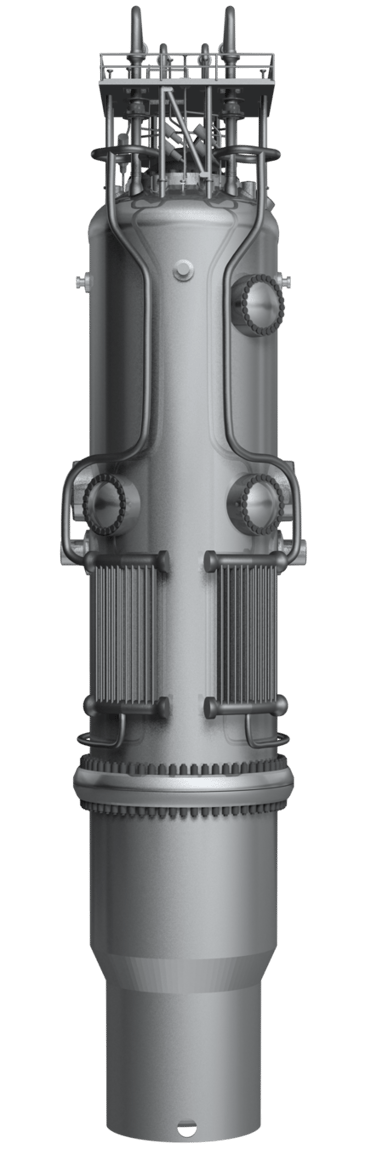
The microreactors boast multi‑year “nuclear battery” operation. Westinghouse eVinci microreactor provides 5 MWe, with a reactor core designed to run for eight or more full‑power years before refueling. A DOE/Westinghouse article describes eVinci as providing 24/7 power “for eight or more years without refueling” and suitable for remote communities, data centers, industrial sites, and defense.
Oklo’s Aurora core hails long‑life and recyclable advanced refueling interval, as little as every 20 years. The U.S. DOE writes that recycling EBR‑II fuel into HALEU and Oklo’s agreement to use it in its first Aurora core. There are further articles here.
ARC‑100 advanced SMR boasts 20‑year refueling cycle: “The proprietary core of the ARC‑100 is designed to operate for 20 years without refueling.” General SMR lifespan and long core life are perfect for data‑center‑focused SMRs: notes that some SMRs are designed “to operate for up to 40 years without refueling,” and that SMRs generally have longer refueling intervals than large reactors.
In general, the SMR market reports typical SMR plant lifespans of 40–60 years with modular construction and simplified decommissioning.
The Problem With Disruptive Technologies
Typically, disruptive technologies rarely succeed on the first attempt. The early automobile was noisy, unreliable, and difficult to refuel, yet it evolved into a globally dominant mode of transport. Aviation itself followed a similar path, starting with fragile prototypes and maturing into the safest mass‑transport system in history.
Electric vehicles (EVs) show how quickly perceptions can shift once technology, infrastructure, and policy align. First‑generation EVs were expensive and limited in range, while today’s models offer far better energy efficiency than internal combustion vehicles and are becoming mainstream in many markets. That evolution did not happen overnight, but the long‑term gains far outweighed the early setbacks.
SMRs and MRs are at a similar early stage, with some projects facing schedule slips, licensing challenges, and debate over economics. Yet the fundamental advantage—a dense, low‑carbon, always‑available power source that can be sited near major loads—remains compelling for sectors like AAM and cloud computing that cannot tolerate frequent power interruptions. What is left to do is to inform the public that this new, or older type, of nuclear power is safe and reliable.
Why nuclear matters for advanced air mobility
AAM infrastructure will be energy‑intensive. Large vertiports, fast‑charging pads for multiple eVTOL aircraft, electric ground support equipment, and digital traffic management systems will all demand significant, predictable power. A National Renewable Energy Laboratory (NREL) study highlighted that eVTOL charging alone could strain local grids and require on‑site generation and storage at many vertiports.
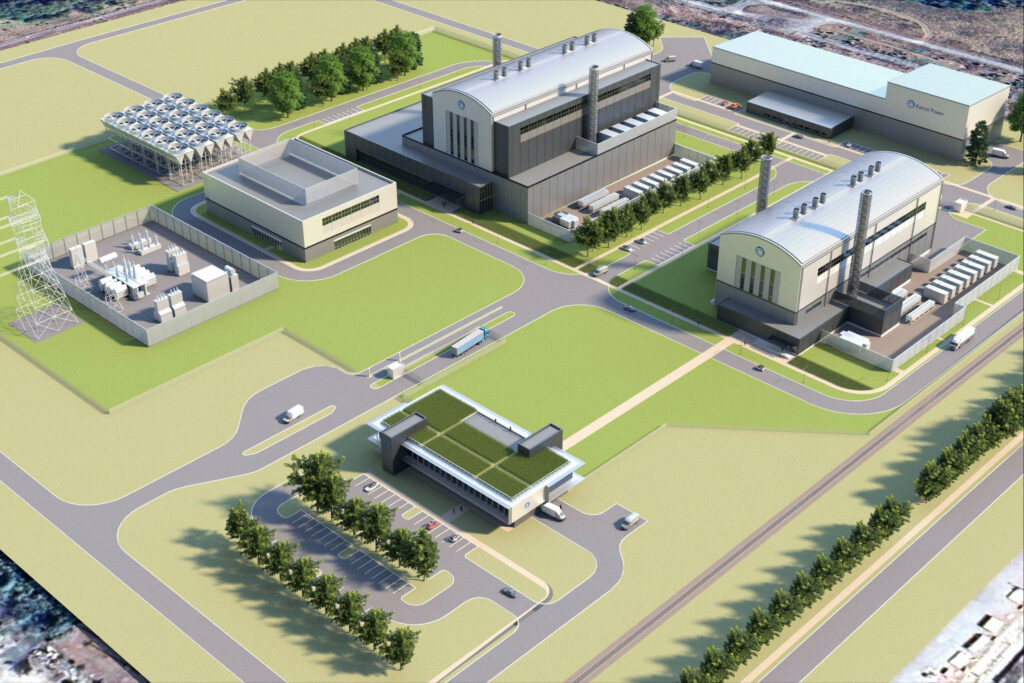
Renewable sources such as solar and wind are vital to decarbonizing the electricity supply but remain incfremental needing energy storage for constant output. SMRs and MRs can complement these resources by delivering stable baseload power for decades, sometimes operating for years between refueling, and can be integrated into microgrids that keep critical AAM facilities running during wider grid disturbances.
Electric Air Mobility has already explored how modular nuclear reactors, including molten‑salt variants, could support smart cities and vertiport networks. Oklo’s work on nuclear fuel recycling and compact “Aurora” powerhouses shows how small reactors might provide long‑duration, low‑carbon power for future AAM infrastructure and surrounding communities.
Nuclear, data centers, and the digital side of AAM
AAM will not exist in isolation; it will depend on cloud‑based services, AI‑driven traffic management, and high‑availability communications—most of which run through power‑hungry data centers. Tech companies and utilities are already exploring SMRs as dedicated power sources for these facilities, aiming to combine grid independence with deep decarbonization.
NuScale has signed agreements to supply nearly 2 GW of SMR power to data‑center projects, while companies such as Kairos, Oklo, X‑energy, and others are targeting AI and cloud workloads with advanced reactor designs. Westinghouse’s eVinci microreactor is being positioned as a transportable, 5‑MWe source that can serve remote sites, mining operations, and data centers on footprints as small as a few acres.
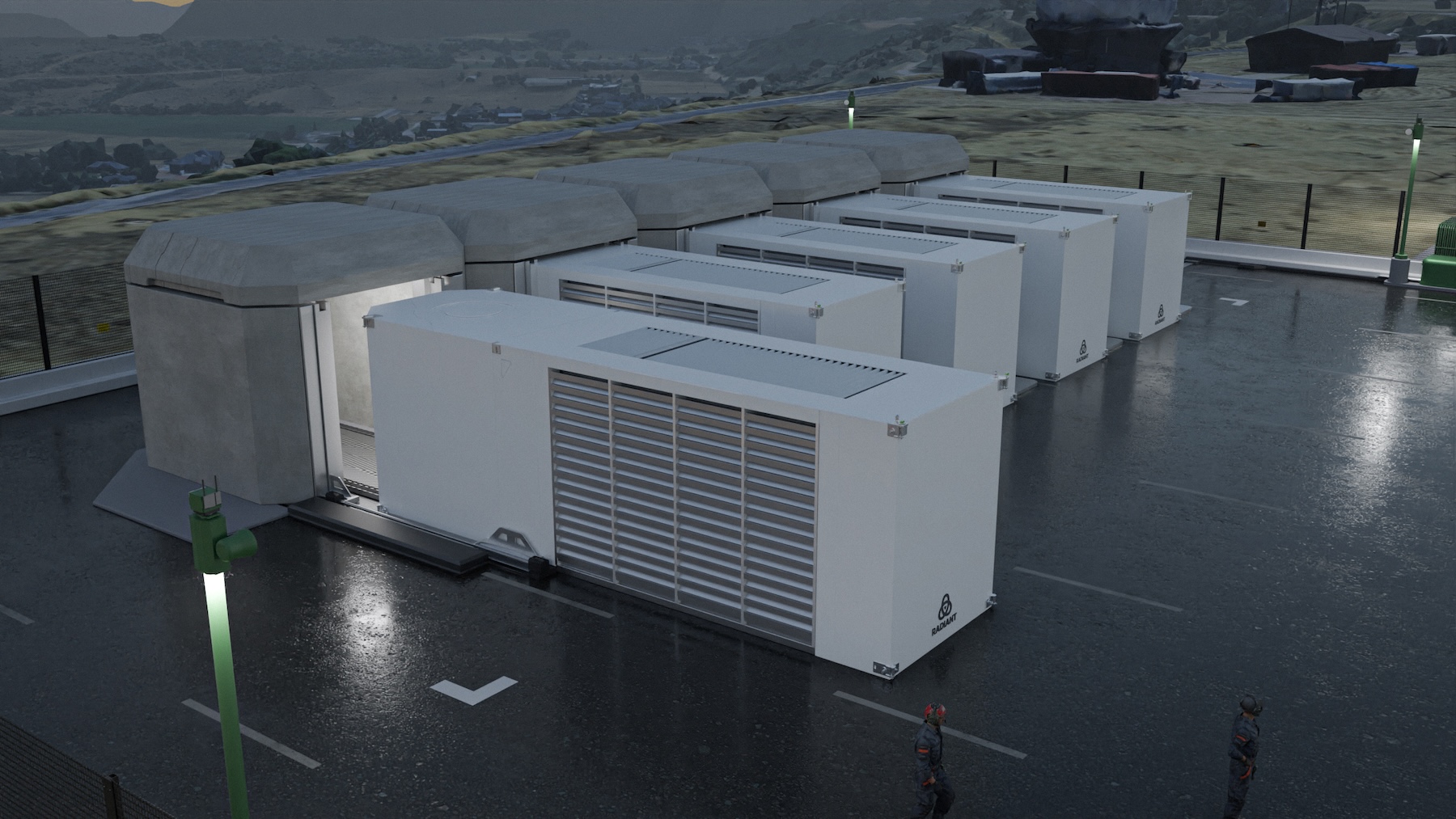
Microreactor developers like Radiant are working on containerized units designed to replace diesel generators and provide resilient backup power to facilities such as hospitals, military bases, and potentially aviation or AAM hubs. These projects suggest a future where AAM vertiports, their local data centers, and emergency systems could all share a common, nuclear‑backed microgrid.
A vision of nuclear‑enabled AAM ecosystems
Looking ahead, AAM and advanced nuclear could reinforce each other. As more cities test air‑taxi routes, regional eSTOL services, and cargo drone networks, questions about local power availability, resilience, and emissions will become central to planning. In some locations, SMRs or MRs could anchor clean‑energy districts that host vertiports, battery plants, hydrogen production, and logistics hubs.
Electric Air Mobility has argued that the nuclear revival, especially around SMRs and MRs, can help enable high‑demand AAM infrastructure in ways that would be difficult with renewables alone. Oklo’s fuel‑recycling work, along with Department of Energy support for microreactor experiments at Idaho National Laboratory, points toward a future of smaller, safer reactors with improved fuel use and reduced waste.
None of this removes the need to address nuclear waste, licensing, costs, and community acceptance. But as with the early days of aviation and EVs, real‑world demonstrations will be the deciding factor. AAM stakeholders who stay engaged with nuclear developments now will be better positioned to design resilient, low‑carbon energy ecosystems later.
The next frontier: cleaner power for cleaner skies
Nuclear energy will not be a one‑size‑fits‑all answer for AAM, and many regions will rely primarily on renewables, storage, and conventional grid upgrades. Yet SMRs and MRs can be powerful tools where reliability, resilience, and deep decarbonization are top priorities, especially in locations with constrained transmission or fast‑growing electric demand.
As AAM expands, attention will also turn upstream to the manufacturing processes for aircraft, batteries, electronics, and infrastructure. Making those industrial systems cleaner and more efficient will multiply the climate benefits of both nuclear and renewables and further enhance the sustainability case for AAM. Progress in these areas could amplify the value of compact reactors and other advanced clean‑energy technologies, helping move AAM from visionary concept to everyday reality.
For further reading and context:
- Westinghouse eVinci microreactor overview.
- US Department of Energy.gov.
- Westinghouse Nuclear.
- Westinghouse and Radiant selected for first microreactor tests at INL’s DOME facility.
- DOE and INL microreactor test bed and industry partners.
- Oklo’s nuclear fuel recycling and AAM implications (Electric Air Mobility).
- NREL on eVTOL charging, energy, and storage needs for AAM vertiports (Electric Air Mobility).
- The Nuclear Energy Revolution for AAM (Electric Air Mobility).
- Electric Air Mobility nuclear‑energy tag page.
- AAM basics and ecosystem context (Electric Air Mobility).
- Nuclear Powering AI in the news.