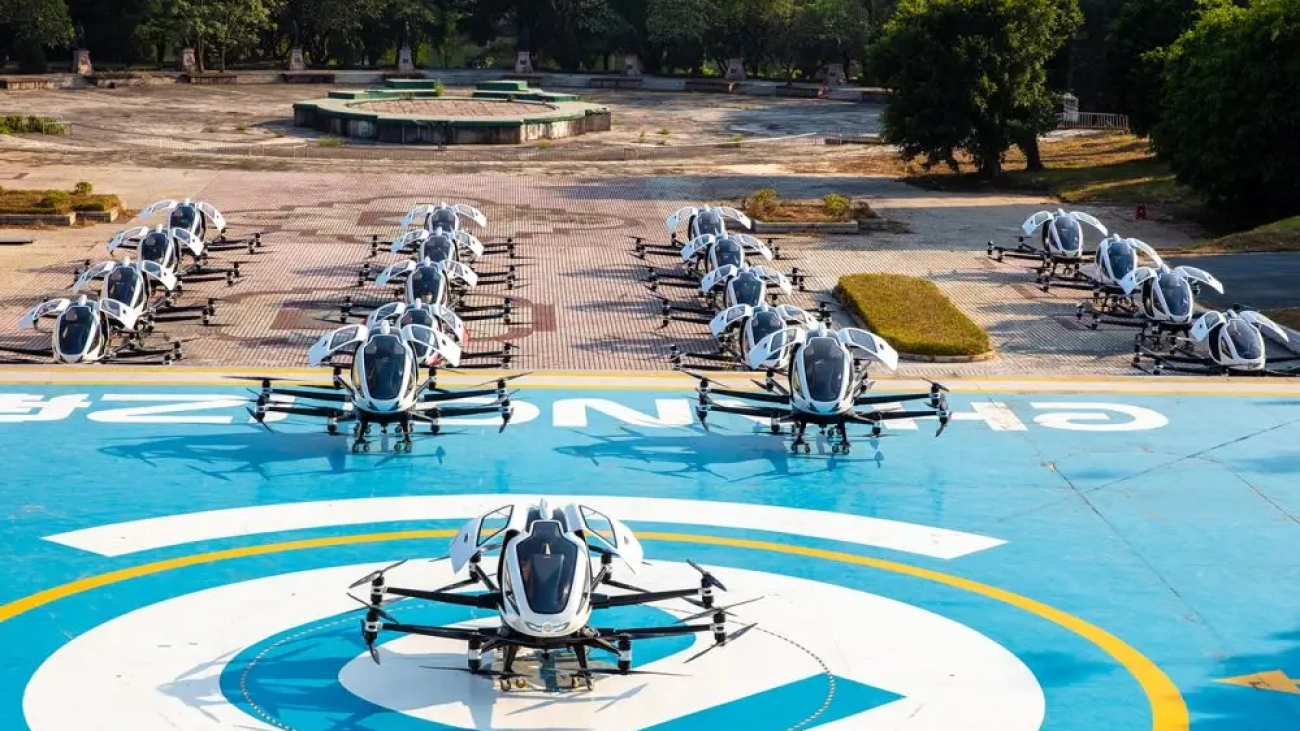
January 2026 delivered pivotal developments shaping advanced air mobility’s future. The FAA announced its largest reorganization in history, creating a dedicated Office of Advanced Aviation Technologies for eVTOLs, drones, and supersonic aircraft. Meanwhile, China’s low-altitude economy deployed 5.29 million operating aircraft with commercial eVTOL services already active. Ohio emerged as America’s AAM manufacturing hub with Joby’s second facility announcement, powered by strategic workforce investment. Drone delivery leader Zipline raised $600 million at a $7.6 billion valuation, surpassing 2 million deliveries while expanding to Houston and Phoenix. This comprehensive roundup explores regulatory maturation, geographic competition, and infrastructure investment driving AAM toward critical tipping points in 2026.
As electric air mobility takes flight, the US Postal Service eyes electric airplanes for New York-Detroit mail routes. Leaders like BETA Technologies and Electra.aero drive hybrid-electric advances, slashing emissions and unlocking short takeoffs. This 750-word read covers the shift for aviation pros.
Everyone in Advanced Air Mobility knows the truth: we’re developing revolutionary electric aircraft using century-old business models. People leave traditional aviation frustrated, join AAM startups promising change, then fall right back into the same patterns. The technology works—electric aircraft are proven 2-3x more efficient than conventional aircraft. So why do we keep choosing outdated frameworks? Explore what really holds AAM back and what needs to change.
The FAA’s Part 108 BVLOS proposal would finally move drones beyond the slow, waiver‑based system of Part 107, creating a framework for routine flights at scale. But aviation groups like NBAA, VAI, and EAA argue that unclear right‑of‑way rules, heavy paperwork, and weak detect‑and‑avoid requirements could shift risk onto helicopters, GA, and future AAM operations that already rely on the same low‑altitude airspace.
EHang’s VT35 is more than a new airframe; it is the long‑range link that turns today’s EH216‑S urban air taxi routes into a wider, intercity network. With a 200 km design range, compatibility with existing vertiports, and strong backing from Hefei’s low‑altitude economy strategy, the VT35 shows how China plans to scale autonomous passenger eVTOLs from sightseeing flights to everyday regional transport.
As 2025 draws to a close, the Advanced Air Mobility industry showed resilience through turbulence. Despite aviation challenges and startup volatility, progress continued with educational initiatives like AAM Master Classes, media platforms expanding reach, and key players positioning for 2026. A year-end reflection on solutions, obstacles, and what’s ahead.
Electra.aero has applied for FAA Part 23 certification for its EL9 hybrid-electric aircraft, marking a major step toward commercial service. Simultaneously, the company launched “Electra Defense” to adapt its ultra-short takeoff and landing technology for military logistics, offering runway-independent operations for the U.S. Armed Forces.
The AAM Master Class Rome 2025 launches this September at Rome Fiumicino Airport, offering a comprehensive training experience on electric vertical takeoff and landing, infrastructure, energy systems, and regulations. Designed for airport officials and aviation professionals, this 2.5-day master class provides practical insights, networking opportunities, and CPD certification.
The FAA urgently needs increased funding to modernize its aging air traffic control systems. With only a fraction of the required budget approved, the agency faces delays that could hinder the safe integration of advanced air mobility technologies like eVTOLs. Industry experts and lawmakers call for swift action to ensure a seamless transition to next-generation airspace management.
There are more solutions than obstacles. Nicolas Zart
In this special episode of The Ways We Move, I have the privilege of sitting down with Rex Alexander, an old friend and one of the most respected professionals working in aviation infrastructure today, building the future of advanced air mobility (AAM). Rex is the founder of Five Alpha, also known as Mr. Infrastructure, a title that fits his great knowledge of the industry. With military aviation and helicopter, emergency, ambulance, and commercial aviation expertise, he has become the person industry leaders call when they need honest answers and trusted guidance on heliports, vertiports, and the rapidly growing world of multiport operations.
Joby S4 eVTOL taking off – Picture Nicolas Zart
We reflect on how far the conversation around infrastructure has come since 2018, when the standards and policies governing heliport and vertiport operations truly began to evolve. Rex shares his first-hand perspective on the long series of meetings with the FAA and other agencies, collaborations that have helped push standards forward and align policies across not only the United States, but also Europe and global regulatory bodies such as EASA and ICAO. As regulations move forward, the need for common frameworks and mutual recognition becomes more urgent.
Advanced Air Mobility, Humble Beginnings, Amazing Potential
The discussion explores the practical realities behind the promise of electric vertical take-off and landing (eVTOL), electric short take-off and landing (eSTOL), and finally, electric conventional take-off and landing (eCTOL). We highlight the difference between prototype and commercial certification, the integration of the various aircraft operations, and the harmonization of air traffic as great challenges, as well as the keys to real-world deployment. Rex explains why the United States faces particularly complex hurdles; land use and infrastructure oversight are split between federal, state, and municipal authorities, creating a patchwork of rules and requirements. In contrast, many other countries have much more centralized systems, which can streamline progress but also present new sets of questions.
Electra.Aero eSTOL
The Rebirth of Regional Airports for AAM
Rex and I talk about the crucial roles regional airports play, especially as the industry looks beyond just vertiport sites and envisions multiport networks. These will enable not only eVTOLs but also eSTOL and eCTOL aircraft, paving the way for a more holistic and inclusive system of operations. Rex emphasizes that success in building AAM infrastructure is not just about engineering or policy, but about understanding what each community and operator truly needs.
Throughout our conversation, it becomes clear that municipal engagement is essential. The future of flight will depend on strong partnerships at every level, and cities must be included in the vision from day one. As Rex says, we need solutions that are practical, scalable, and shaped by the realities on the ground.
Rex’s Journey into Aerospace
Rex’s journey began early, with his hands on flight controls before he turned fifteen, moving through fixed wing and rotorcraft, from military service to the offshore sector, and finally, to leading the charge on infrastructure best practices that have become industry standards. He is someone who brings not just technical expertise but a sense of stewardship for safety, reliability, and the broader mission of connecting people through aviation.
There is no shortcut to building trust in a field as safety-critical as aviation. Voices like Rex’s—honest, experienced, and deeply committed—are essential as we create infrastructure that will sustain the next generation of aviation. Our conversation is full of insight on where we are, how we got here, and what it will take to ensure AAM infrastructure serves everyone: operators, regulators, and the communities we all aim to connect.
NASA AAM eVTOL operations
We wrap up part one, looking forward to future episodes where we continue the discussion on global standards, community engagement, and what it means to build for longevity rather than hype. Rex, thank you for the work you do, for your guidance, and for always taking my calls when I need answers that cut through the noise.
Please share your thoughts, comments, and questions. Subscribe to The Ways We Move for more in-depth conversations with leaders who are shaping the future of mobility and infrastructure
Shopping Basket
Cookie Consent
We use cookies to improve your experience on our site. By using our site, you consent to cookies.
Contains information related to marketing campaigns of the user. These are shared with Google AdWords / Google Ads when the Google Ads and Google Analytics accounts are linked together.
90 days
__utma
ID used to identify users and sessions
2 years after last activity
__utmt
Used to monitor number of Google Analytics server requests
10 minutes
__utmb
Used to distinguish new sessions and visits. This cookie is set when the GA.js javascript library is loaded and there is no existing __utmb cookie. The cookie is updated every time data is sent to the Google Analytics server.
30 minutes after last activity
__utmc
Used only with old Urchin versions of Google Analytics and not with GA.js. Was used to distinguish between new sessions and visits at the end of a session.
End of session (browser)
__utmz
Contains information about the traffic source or campaign that directed user to the website. The cookie is set when the GA.js javascript is loaded and updated when data is sent to the Google Anaytics server
6 months after last activity
__utmv
Contains custom information set by the web developer via the _setCustomVar method in Google Analytics. This cookie is updated every time new data is sent to the Google Analytics server.
2 years after last activity
__utmx
Used to determine whether a user is included in an A / B or Multivariate test.
18 months
_ga
ID used to identify users
2 years
_gali
Used by Google Analytics to determine which links on a page are being clicked
30 seconds
_ga_
ID used to identify users
2 years
_gid
ID used to identify users for 24 hours after last activity
24 hours
_gat
Used to monitor number of Google Analytics server requests when using Google Tag Manager