ElectricAirMobility.news is back! We have great news with the introductions of a Patreon patrons-only The Ways We Move+, early access & more.
AutoFlight has completed a public transition flight of its 5 ton class Matrix eVTOL in China. The 10 seat aircraft moves the industry beyond four to six seat designs and pushes Advanced Air Mobility toward higher payloads, cargo operations, and new route economics. We look at what this milestone means for regulators, infrastructure planners, and operators watching the large eVTOL space.
Hawaii is positioning itself for federal eVTOL Integration Pilot Program selection through a partnership combining existing airline operations with electric aircraft technology. Surf Air Mobility, the Hawaii Department of Transportation, and BETA Technologies submitted a joint eIPP application on January 27, leveraging Mokulele Airlines’ position as Hawaii’s largest commuter carrier by scheduled departures. The partnership plans to initially conduct cargo missions between Mokulele’s existing interisland routes using BETA’s ALIA electric aircraft, building on the airline’s 36,000 flights in 2025 averaging 51 miles, ideal for first generation electric aircraft. If selected, the initiative would advance electric aviation through real world regional airline integration rather than theoretical deployment scenarios.
This week, ElectricAirMobility.news begins a full site migration to enhance performance and user experience. Expect brief disruptions until completion.
January 2026 delivered pivotal developments shaping advanced air mobility’s future. The FAA announced its largest reorganization in history, creating a dedicated Office of Advanced Aviation Technologies for eVTOLs, drones, and supersonic aircraft. Meanwhile, China’s low-altitude economy deployed 5.29 million operating aircraft with commercial eVTOL services already active. Ohio emerged as America’s AAM manufacturing hub with Joby’s second facility announcement, powered by strategic workforce investment. Drone delivery leader Zipline raised $600 million at a $7.6 billion valuation, surpassing 2 million deliveries while expanding to Houston and Phoenix. This comprehensive roundup explores regulatory maturation, geographic competition, and infrastructure investment driving AAM toward critical tipping points in 2026.
In the largest organizational overhaul in FAA history, Transportation Secretary Sean P. Duffy and Administrator Bryan Bedford announced a comprehensive restructuring that creates a dedicated Office of Advanced Aviation Technologies for eVTOLs, drones, and supersonic aircraft. The January 27, 2026 announcement elevates advanced air mobility to top-level status alongside traditional aviation operations, signaling that electric vertical takeoff and landing aircraft are no longer experimental but core to America’s aviation future. With multiple eVTOL manufacturers approaching certification, the eIPP launching in 2026, and the 2028 LA Olympics showcasing urban air mobility, the timing is critical. This analysis explores what the reorganization means for AAM stakeholders, certification timelines, infrastructure development, safety oversight, and the path to commercial operations.
The EU’s Sustainable Transport Investment Plan directs nearly €3 billion toward SAF and e‑kerosene. Beyond fuels, it defines the energy and investment environment in which Europe’s Advanced Air Mobility ecosystem will grow.
Five years ago, eVTOLs were ‘coming in 2025.’ Now it’s 2026. Joby, Archer, Vertical race for FAA certs—but energy infrastructure, not airframes, holds the real key.
As electric air mobility takes flight, the US Postal Service eyes electric airplanes for New York-Detroit mail routes. Leaders like BETA Technologies and Electra.aero drive hybrid-electric advances, slashing emissions and unlocking short takeoffs. This 750-word read covers the shift for aviation pros.
Veteran aviation expert Oscar Lara joins The Ways We Move podcast to demystify eVTOL’s future: from blending fixed-wing efficiency with VTOL flexibility, to navigating FAA certification hurdles and building vertiport infrastructure. Essential listen for AAM stakeholders. Watch now: https://youtu.be/HiTHqGd3MFs
Thanks to the eBoat newsletter, Donut Lab’s CES 2026 solid-state battery claims—400 Wh/kg, five-minute full charging, 100,000 cycles—could transform marine EVs by slashing weight and boosting fleet economics. Skepticism warranted, but proof awaits.
AAM security addresses cyber takeover, physical misuse and supply chain risks through FAA guidance and vertiport hardening.
Advanced air mobility shifts from prototypes to operations in 2026. Joby enters FAA test flights, Archer eyes Miami routes, Eve secures US funding, and vertiports face power constraints.
Everyone in Advanced Air Mobility knows the truth: we’re developing revolutionary electric aircraft using century-old business models. People leave traditional aviation frustrated, join AAM startups promising change, then fall right back into the same patterns. The technology works—electric aircraft are proven 2-3x more efficient than conventional aircraft. So why do we keep choosing outdated frameworks? Explore what really holds AAM back and what needs to change.
The FAA’s Part 108 BVLOS proposal would finally move drones beyond the slow, waiver‑based system of Part 107, creating a framework for routine flights at scale. But aviation groups like NBAA, VAI, and EAA argue that unclear right‑of‑way rules, heavy paperwork, and weak detect‑and‑avoid requirements could shift risk onto helicopters, GA, and future AAM operations that already rely on the same low‑altitude airspace.
Cybersecurity is rapidly becoming one of the most critical challenges for advanced air mobility. In this episode, AJ Khan of Vehiqilla explains why a holistic, ecosystem-wide approach is vital to protect fleets, infrastructure, and passengers in a world where every connection is a potential risk.
As advanced air mobility grows, demand for reliable, low‑carbon energy will surge. Small modular nuclear reactors and micro‑reactors could become key partners to renewables, providing constant power for vertiports, charging networks, and digital air traffic services.
The FAA has released a proposed rule that would require most U.S. aircraft to upgrade their radio altimeters to withstand 5G interference. This change will affect not only airlines and business jets, but also future advanced air mobility (AAM) aircraft that rely on precise low‑altitude height data for safe urban operations.
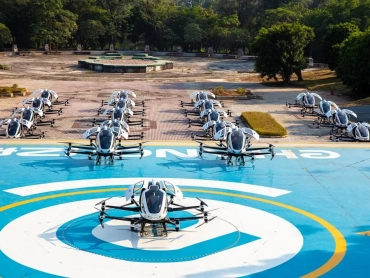
EHang’s VT35 is more than a new airframe; it is the long‑range link that turns today’s EH216‑S urban air taxi routes into a wider, intercity network. With a 200 km design range, compatibility with existing vertiports, and strong backing from Hefei’s low‑altitude economy strategy, the VT35 shows how China plans to scale autonomous passenger eVTOLs from sightseeing flights to everyday regional transport.
Vertical Aerospace reveals Valo, its production eVTOL succeeding VX4. 100-mile range, premium 4-6 seat cabin, largest luggage class. UK air taxi network and Riviera routes announced.
ATR a été sélectionné par European Clean Aviation pour créer différentes versions hybrides électriques propres de ses plateformes ATR 72 afin de répondre au projet de mobilité aérienne urbaine pour des vols régionaux propres.
ATR was selected by the European Clean Aviation to create various clean electric-hybrid version’s of its ATR 72 platforms to tackle urban air mobility project for regional clean flights.
Africa’s regional aviation needs fresh wings. Deutsche Aircraft’s D328eco promises 30% lower costs than old turboprops, strong climbs from short runways, and easy pilot training with Garmin G5000 avionics. As fleets double by 2044, this 40-seat plane fills a key gap.
Portugal’s new e-car BEN targets a projected €8,000 price and EU-approved city mobility, signalling a bold local answer to affordable EVs. In this post, a Portugal-based B2B voice connects BEN to the country’s fast-growing cork, EV battery and electric air mobility ecosystem.

The eVTOL Show 2025 in Palo Alto, chaired by Nicolas Zart, redefined industry conferences with its single-day, high-impact format, live eVTOL displays, and in-depth technical sessions, making it the definitive gathering for AAM professionals.
The United States has released its first Advanced Air Mobility National Strategy, setting ambitious targets for initial operations by 2027 and fully autonomous flights by 2035. The comprehensive plan includes 40 recommendations across six critical pillars and establishes the U.S. as a global leader in next-generation aviation infrastructure.
As 2025 draws to a close, the Advanced Air Mobility industry showed resilience through turbulence. Despite aviation challenges and startup volatility, progress continued with educational initiatives like AAM Master Classes, media platforms expanding reach, and key players positioning for 2026. A year-end reflection on solutions, obstacles, and what’s ahead.
The Ways We Move podcast celebrates 1,000 downloads in its first year. Special thanks to our first sponsor AeroAuto Global and to our community of listeners passionate about innovative mobility solutions. Learn how you can support quality, free content about electric aviation, urban air mobility, and the future of transportation.
Electra.aero has applied for FAA Part 23 certification for its EL9 hybrid-electric aircraft, marking a major step toward commercial service. Simultaneously, the company launched “Electra Defense” to adapt its ultra-short takeoff and landing technology for military logistics, offering runway-independent operations for the U.S. Armed Forces.
Robert Bassey, former FAA senior leader and key contributor to the nation’s first vertiport design standards, has been appointed Chairman of Avika Sky, the first U.S. Advanced Air Mobility infrastructure consortium. Learn about his transition from government to startup and what’s next for AAM deployment.


There are more solutions than obstacles. Nicolas Zart Electric aircraft maker Beta Technologies is working with Pennsylvania‑based Near Earth Autonomy to en ...
n this episode of The Ways We Move podcast, host Nicolas Zart explores an unexpected hero in the sustainable mobility revolution: cork. This 5,000-year-old material, traditionally associated with wine bottles and bulletin boards, is quietly reshaping how we design everything from electric vehicles to spacecraft and could soon play a crucial role in advanced air mobility.
See what has happened from October and November in AAM news. Piper to MD Aircraft, BETA Technology, magnix, Electra, and Joby
The competitive landscape of Advanced Air Mobility (AAM) just saw a massive shift. Archer Aviation acquired the core patent portfolio of the now-insolvent Lilium, a strategic move that secures critical ducted fan technology and strengthens the U.S. position in the global eVTOL market.
Cork, a 5,000-year-old material, is emerging as a critical enabler for advanced air mobility. From NASA spacecraft to BMW EVs and the future of eVTOLs, this podcast episode reveals cork’s extraordinary performance, sustainability, and growing role in the world’s most innovative transportation solutions.
Sustainable aviation fuel offers a near-term solution to decarbonize aviation by replacing fossil jet fuel with renewable alternatives. Technologies like hydroprocessed esters and fatty acids and alcohol-to-jet are scaling up, supported by industry leaders and government policies aimed at net-zero emissions.
The AAM Master Class Rome 2025 launches this September at Rome Fiumicino Airport, offering a comprehensive training experience on electric vertical takeoff and landing, infrastructure, energy systems, and regulations. Designed for airport officials and aviation professionals, this 2.5-day master class provides practical insights, networking opportunities, and CPD certification.
EASA’s new proposal sets noise certification standards tailored for VTOL aircraft, addressing unique operational noise and aiding urban air mobility acceptance. Public feedback is accepted through late 2025.
The FAA urgently needs increased funding to modernize its aging air traffic control systems. With only a fraction of the required budget approved, the agency faces delays that could hinder the safe integration of advanced air mobility technologies like eVTOLs. Industry experts and lawmakers call for swift action to ensure a seamless transition to next-generation airspace management.
While ElectricAirMobility.news began with a focus on advanced air mobility, the electric revolution extends across air, sea, and land. The Port of Los Angeles recently announced a landmark $160 million contract to deploy hybrid-electric tugboats, underscoring electrification’s expanding footprint. This milestone reflects the growing convergence of electric mobility modes, collectively shaping a cleaner, more efficient transportation future.
Big things are coming! ElectricAirMobility.news is migrating to a new domain and hosting platform to bring you an even better experience. We’ll be back by September 16–17 with expanded coverage—including electric maritime, railroads, and more. Stay tuned!
In part two of his conversation on reinventing airports, Clint Harper explores how aviation infrastructure can transform into multi-modal mobility hubs. By linking air taxis with rail, buses, and micromobility, airports can serve as true connectors in sustainable transport networks.
In advanced air mobility, communication and marketing are not the same — and the order matters. Electric Air Mobility, LLC explains why starting with a clear, authentic story builds trust and makes marketing work harder, and how our AAM Masterclass helps airport executives prepare for the future of flight.
On August 12, 2025, SolarStratos made history as pilot Raphaël Domjan soared to 9,521 meters using only solar energy. This landmark flight demonstrates the potential of electric and solar-powered aviation to reach airliner altitudes, pushing the boundaries of clean, silent, and sustainable air mobility. The milestone underscores a promising future for decarbonized flight inspired by renewable energy innovation.
In this episode of The Ways We Move podcast, Clint Harper, a military airport manager and urban planner, explores how airports can embrace advanced air mobility and evolve into multi-modal hubs. Learn how resilient infrastructure, community engagement, and smart economics can help airports lead the way in supporting electric aviation and regional connectivity.
Destinus’s acquisition of AI avionics specialist Daedalean strengthens its position in autonomous flight with enhanced AI capabilities for defense and civil UAVs.
On The Ways We Move podcast, guest Rex Alexander talks about how advanced air mobility (AAM) infrastructure is changing how we see and conceptualize urban air mobility (UAM) and regional air travel, challenges, regulatory updates. Most importantly, a strong, safe, and robust infrastructure will allow for a cleaner and more efficient future of air travel. Find out more about what the future of air travel looks like from Mr. Infrastructure himself!
Charging an EV battery to 100% regularly can shorten its lifespan. Experts recommend keeping charge levels mostly between 20% to 80% to reduce stress on the battery and maintain better long-term performance.
Joby Aviation’s acquisition of Blade Air Mobility’s passenger business marks a major step in expanding urban air mobility infrastructure. This strategic move brings Joby closer to operational passenger hubs, accelerating the rollout of electric air taxis in key global markets.
The FAA’s MOSAIC modernizes the path for light sport and electric aircraft by removing outdated weight and speed limits and expanding eligible designs. This article explains how the new rule benefits advanced air mobility, supports pilot training, and prepares the industry for a new era of clean, affordable aviation.
There are more solutions than obstacles. Nicolas Zart In this special episode of The Ways We Move, I have the privilege of sitting down with Rex Alexander, ...
From the moment I first connected with SkyDrive, I sensed they were onto something transformative. By forging deep partnerships with Japan’s leading rail operators, SkyDrive is maximizing the efficiency and reach of urban air mobility—creating seamless, short-hop connections that complement the country’s world-class public transit. Their strategy isn’t just smart; it’s a blueprint for how UAM can truly thrive in dense, transit-rich cities.
FlyNow Aviation, co-founded by Yvonne Winter, is transforming urban air mobility with its modular, cost-effective eCopter and a business model focused on making 3D mobility as affordable as a taxi ride. With a pragmatic approach to automation and a focus on real-world impact, FlyNow is poised to bring electric vertical flight to cities worldwide.
Formula E didn’t just launch a new racing series—it sparked a global movement. By proving that electric racing could be thrilling and innovative, Formula E paved the way for a host of new competitions like Extreme E, MotoE, and more, accelerating the world’s transition to sustainable motorsport.
There are more solutions than obstacles. Nicolas Zart As advanced air mobility (AAM) continues to connect cities, airports, and communities with electric an ...
AIRO Group’s remarkable IPO signals a turning point in advanced air mobility, uniting Jaunt Air Mobility’s compound slowed rotor technology and Carter Copter’s decades of gyrocopter innovation to drive the next generation of aerospace solutions.
This week in advanced air mobility: Deutsche Aircraft unveils the D328eco test aircraft, Airbus faces ongoing delivery delays, and the Paris Air Show 2025 spotlights the latest in sustainable aviation and eVTOL innovation.
Georgia Tech’s Prof. Marilyn Smith joins The Ways We Move podcast to explain aviation downwash, its challenges for advanced air mobility, and how research is driving safer, smarter eVTOL and vertiport solutions.
From relaxed U.S. drone regulations to hydrogen-powered aircraft, the aviation industry is undergoing seismic shifts. Here’s what AAM leaders need to know
Leo Flight is pioneering high-efficiency electric jet propulsion for eVTOLs, offering unmatched speed, range, and quiet operation. Their technology could transform urban air mobility, cargo drones, and defense applications. Learn how this U.S.-based innovator is pushing the boundaries of electric flight.
While hydrogen dominates clean aviation discussions, MIT’s breakthrough fuel cell achieves comparable range without infrastructure overhauls. This analysis draws on DOE, EASA, and ICCT data to argue for technology-neutral policies in the race to decarbonize flight.
The IMO’s landmark decisions—the Net-Zero Framework and the North-East Atlantic Emission Control Area (AtlECA)—mark a turning point for global shipping. With stricter emissions rules and financial incentives, can the maritime industry achieve full decarbonization by 2050?
Electra’s EL9 hybrid-electric aircraft has proven its revolutionary “blown lift” wing design in MIT’s wind tunnel, achieving lift coefficients 7X higher than traditional aircraft. This breakthrough paves the way for takeoffs and landings in just 150 feet—unlocking new possibilities for regional mobility and military logistics.
There are more solutions than obstacles. Nicolas Zart Donald Thomas, NASA Astronaut, famously says: “Never leave Earth without cork.” And he makes a point o ...
The aviation industry’s most urgent question: How will airports adapt to Advanced Air Mobility?
Hosted by UrbanV and Aeroporti di Roma, this inaugural AAM MasterClass (Sept 23–25, 2025) is the first program to unite airport leaders, skeptics, and innovators—including Adam Cohen, Kolin Schunck, Clint Harper, Sergio Cecutta, and Rex Alexander—for actionable dialogue on:
Infrastructure: Vertiport integration with existing airports.
Policy: Navigating EASA/FAA regulations.
Economics: Budget frameworks for hesitant airports.
Why attend?
🎯 100-seat limit: Intensive, collaborative learning.
🤝 Bridge divides: Engage with proponents and skeptics alike.
🏛️ Location: Rome Fiumicino’s Innovation Hub—a living AAM lab.
“This isn’t just training—it’s the foundation for aviation’s next decade.” – Nicolas Zart
📣 Reserve your seat → AAMMasterClass.com
Welcome to Episode 6 of The Ways We Move! Host Nicolas Zart sits down with James Bell, Head of Kia North America Communications, for a rare insider’s look at the electric vehicle revolution. From his days as an automotive journalist at Kelley Blue Book to guiding GM through its transformational years and now leading Kia’s communications, James shares hard-won lessons on:
What 18 months with the Kia EV6 taught him about real-world EV efficiency and consumer adoption.
The unspoken challenges of automotive innovation and infrastructure gaps.
Why the future of mobility hinges on storytelling as much as technology.
Tune in for a candid conversation at the intersection of media, policy, and cutting-edge EVs.
Watch or listen to how The Edge Company offers an innovative solution for intrusion detection in both conventional aviation and advanced air mobility (AAM)!
In this episode of The Ways We Move, we explore the future of aviation weather forecasting with Don Berchoff, CEO of TruWeather Solutions. From his roots in Queens to reshaping weather systems for AAM, Don shares why the skies of tomorrow demand better data today.
In the latest episode of The Ways We Move podcast, I sit down with Skyway CEO Cliff Cruz to explore the exciting innovations shaping Advanced Air Mobility (AAM). From vertiport operations to seamless airspace management, Cliff shares insights on how Skyway is connecting air and ground transportation. Don’t miss this conversation about the future of mobility!
It’s been a whirlwind three months since launching The Ways We Move Podcast! In this article, I share why our human-focused approach to mobility innovation sets us apart—from revealing the people behind groundbreaking technologies to exploring how these advancements shape our society. Join me on this journey as we integrate our episodes right here on electricairmobility.news, and get a sneak peek into what’s next.
In this Electric Air Mobility news round up for the end of January 2025, we look into AAM News round up January 2025, Oklo nuclear energy, FCC AAM spectrum rule change, Amprius battery energy density, and Leo Flight Solo eVTOL
Catch up on the second week of January 2025’s Advanced Air Mobility news: updated FAA EB 105A, Lilium, gets a cash injection, Wisk builds its first Generation 6 eVTOL, and Beyond Aero plans to build a hydrogen business jet!
The 2025 FAA Overhaul is a gargantuan task which will shake up how the aviation industry operates. From privatization talks of ATC, BVLOS, Innovate 28 plan, the FAA’s proposed rule RIN 2120-AL72 and what it means for AAM.
Discover how Advanced Air Mobility (AAM) evolved from the 1950s dream of urban air mobility (UAM) into a transformative solution for efficient, sustainable, and inclusive air transportation, powered by cutting-edge technology and infrastructure.
Catch up on January 2025’s Advanced Air Mobility highlights: Elfly partners with H55 on electric trainers, FAA and EASA strengthen AAM safety standards, Volocopter navigates insolvency, and SkyDrive unveils eVTOL routes in Osaka.
Les petits réacteurs modulaires et les microréacteurs offrent un potentiel de transformation pour les vertiports de mobilité aérienne avancée (AAM), en fournissant des solutions énergétiques durables, évolutives et rentables qui répondent aux exigences croissantes de l’aviation électrifiée.
Small Modular Reactors and Micro-Reactors offer transformative potential for Advanced Air Mobility (AAM) vertiports, providing sustainable, scalable, and cost-efficient energy solutions that address the growing demands of electrified aviation.
Welcome to The Ways We Move podcast! Join host Nicolas Zart as he takes you on a journey into the exciting world of mobility, transportation, and innovation. From EVs to AAM, hyperloop to maritime electrification, discover the revolutionary ways we move.
Un aperçu complet de l’état actuel de l’industrie de la mobilité aérienne avancée (AAM), explorant les principaux acteurs, la santé financière, les obstacles à la certification, les innovations technologiques et ce qui nous attend dans cet espace en pleine évolution.
A comprehensive look at the current state of the Advanced Air Mobility (AAM) industry, exploring major players, financial health, certification hurdles, technological innovations, and what lies ahead in this evolving space.
We use cookies to improve your experience on our site. By using our site, you consent to cookies.
Manage your cookie preferences below:
Essential cookies enable basic functions and are necessary for the proper function of the website.
These cookies are needed for adding comments on this website.
Statistics cookies collect information anonymously. This information helps us understand how visitors use our website.
Google Analytics is a powerful tool that tracks and analyzes website traffic for informed marketing decisions.
Service URL: policies.google.com (opens in a new window)