

There are more solutions than obstacles. Nicolas Zart
I’m going through a list of articles I never got around to publishing. So, better than ever, here is a great Europe initiative.
Advanced Air Mobility (AAM) isn’t just electric vertical take-off and landing (eVTOL) or electric short take-off and landing (eSTOL) aircraft; it’s also about what we call eCTOL or electric conventional take-off and landing airplane. These electric and hybrid airplanes continue to diversify AAM’s mission profile. If startups pioneer smaller eVTOLs for urban and short-range applications, established Original Equipment Manufacturers (OEMs) are uniquely positioned to continue development of larger hybrid-electric regional aircraft. These airplanes are capable of serving longer routes and higher passenger capacities. ATR’s selection by the European Union’s Clean Aviation program to lead the development of hybrid-electric regional aircraft demonstrates Europe’s determination to be part of the AAM vehicle race, not just infrastructure.

ATR Takes on AAM
If you’ve flown regionally in Europe, chances are you’ve flown on an ATR. These regional turboprop aircraft, like the ATR 72, are the workhorses of local hops and now, are now planned as flight demonstrations of hybrid-electric propulsion. The goal is to fly a hybrid-electric regional aircraft by 2030, aiming to reduce greenhouse gas emissions by at least 30 percent compared to existing models. Integrating these aircraft into the AAM landscape complements the eVTOL and eSTOL ecosystem by addressing the next critical operation, regional transport. These aircraft seat 50 to 100 passengers on routes up to 250 nautical miles.
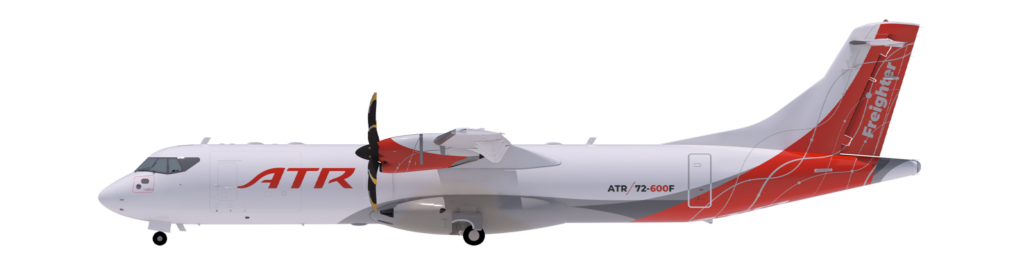
The scale and complexity of hybridizing a regional aircraft like the ATR 72-600 requires infrastructure development and operational experience. So far, we’ve witnessed how startups excel in developing light and innovative urban air mobility (UAM) aircraft for short hops and on-demand mobility. Traditional aerospace OEMs are working on larger fixed-wing aircraft integral to regional connectivity.
ATR’s HERACLES and DEMETRA
Specifically, ATR’s hybrid program includes two flagship projects: HERACLES, which designs an ultra-efficient hybrid-electric aircraft concept, and DEMETRA, which aims to flight-test new propulsion and electrification technologies based on an ATR 72-600. Using batteries and thermal engines with sustainable aviation fuels, as well as ATR and key partners such as Safran, Collins Aerospace, and Pratt & Whitney Canada aircraft systems refinements, this platform will be tested to introduce longer AAM routes with more payloads.
ATR’s leadership in UAM makes it an ideal company for the next generation of hybrid-electric regional aircraft. The company is ideally positioned to offer cleaner, quieter, and more efficient short-haul routes, which will help to rekindle economic development and mobility.
Europe OEM AAM Foray
Europe’s Clean Aviation initiative has a budget of €4.1 billion. It reflects the EU’s broader commitment to climate-neutral aviation by 2050, aligning it with the European Green Deal. Supporting ATR’s hybrid development means placing the continent as an electric air mobility OEM—from micro urban vehicles to larger regional platforms.
ATR CEO Nathalie Tarnaud Laude highlights the strategic importance when she says that the project is “a bold commitment to demonstrate that sustainability and connectivity can go hand in hand.”

In parallel, the ATR EVO next-generation concept is working on eco-design incorporating hybrid power systems and sustainable materials. It is targeting entry into service around 2035.
In summary, ATR leading hybrid-electric regional aircraft development within the Clean Aviation program represents a critical milestone for the entire AAM field. It affirms that building the future of air mobility requires a multi-tiered approach, where the innovation agility of startups and the engineering depth of industry veterans coalesce to create a sustainable aviation ecosystem for the decades to come.