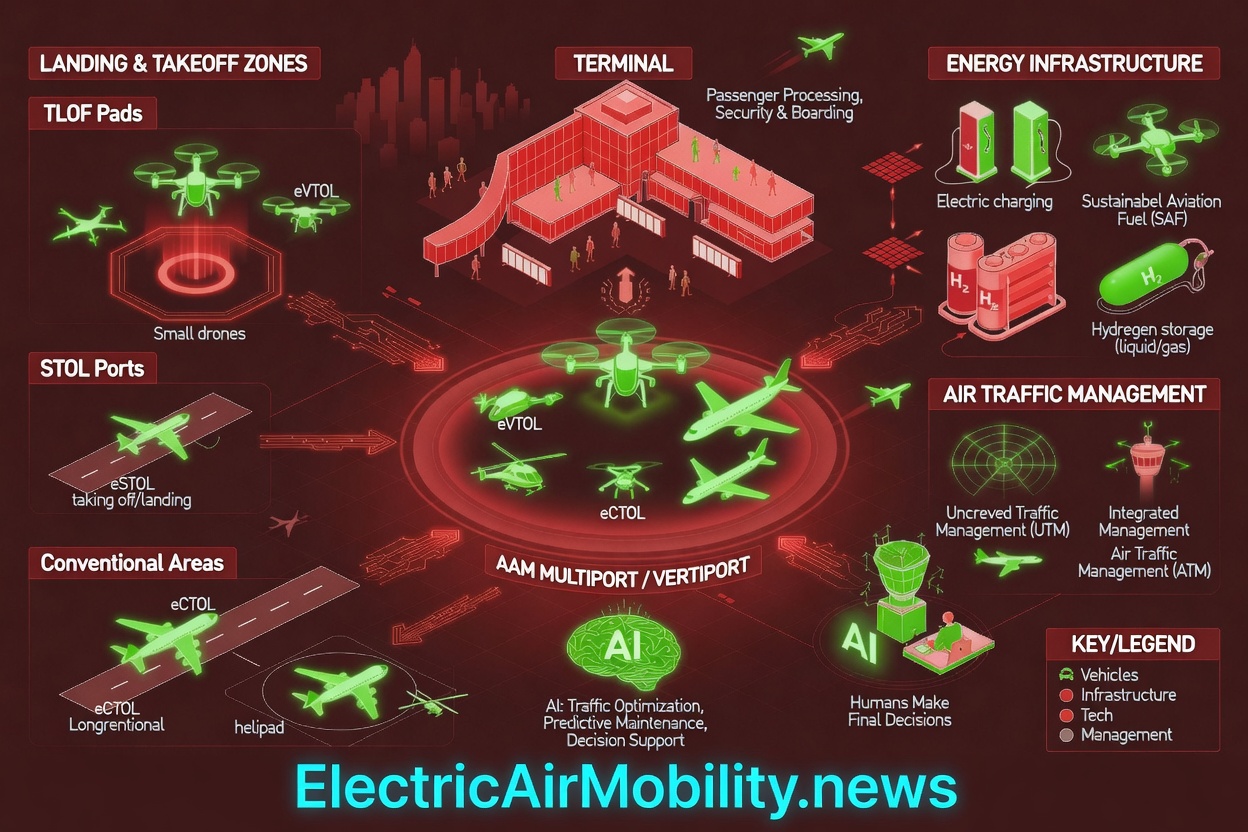
The vehicles are real. The investment is real. The infrastructure that makes those vehicles commercially viable does not yet exist at the scale any business model requires. Twenty-four vertiports broke ground in 2024 against a planned pipeline of 1,504. The honest state of AAM in April 2026.
AAM Weekend Intelligence Roundup — April 2026
Four signals shaping Advanced Air Mobility this week: Archer’s Florida eIPP selection moves Midnight closer to H2 2026 operations, BETA Technologies completes 23 flights in Scotland and signs an expansion MOU with Loganair, Aviation Week surfaces the maintenance workforce bottleneck no commercial model is pricing, and Electra’s EL9 joins the eIPP as the one participant whose infrastructure math bypasses the vertiport dependency entirely.
The Industry Is Moving. But Where is the Industry?
Set aside the courtroom drama for a moment. The part of the Advanced Air Mobility industry that’s actually building things — certifying propulsion systems, rolling out new prototypes, deploying aircraft for emergency response, and pivoting legacy helicopter companies toward autonomy — is moving faster than the headlines suggest. Here’s a clear-eyed look at what happened in the past two weeks and what it means.
Beta Technologies: 1,000 New Jobs and a Vermont eVTOL Bet
Beta Technologies is bursting at the seams. Less than three years after opening its 200,000-square-foot South Burlington manufacturing facility — the first large-scale electric aircraft plant in the United States — the company is doubling down on Vermont with 1,000 new hires, medical flight pilots, and a $3.5 billion backlog of committed orders. This is what patient, infrastructure-first AAM strategy looks like at scale.