

There are more solutions than obstacles. Nicolas Zart
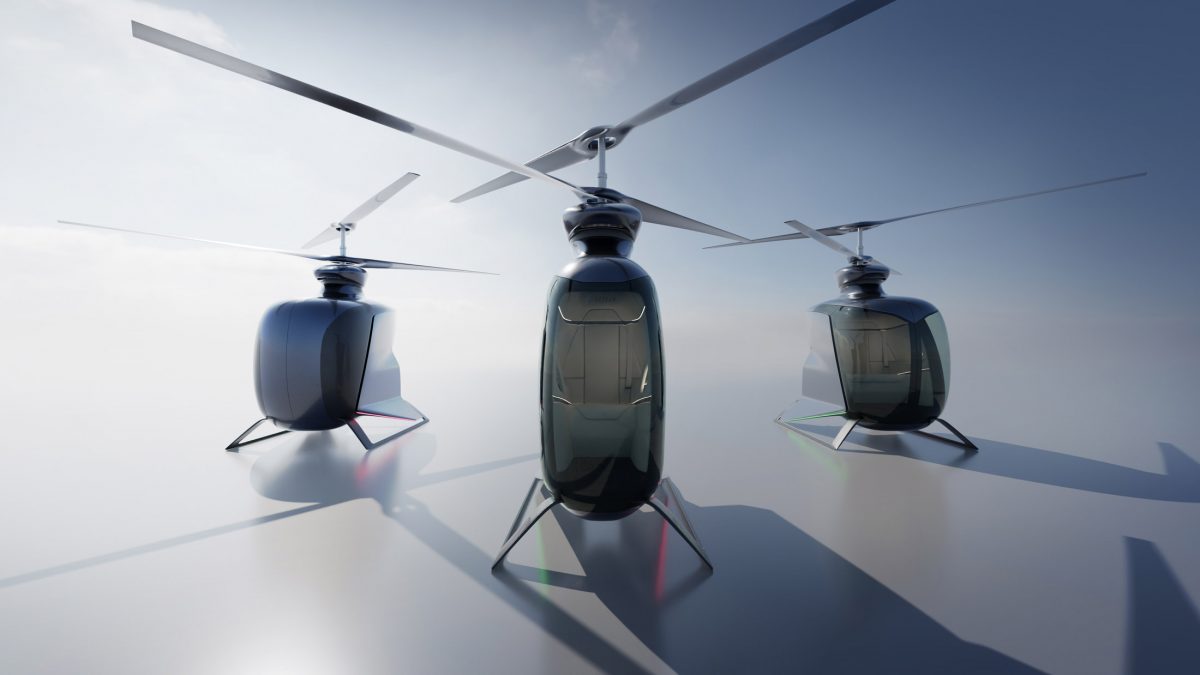
Urban air mobility (UAM) is often seen as a futuristic concept, now challenged by regional air mobility. However, a new wave of advanced air mobility (AAM) 2.0 companies is challenging the early champions. FlyNow Aviation, an Austrian startup, is one of those new startups working to offer a practical and affordable AAM solution. Co-founded by Yvonne Winter, FlyNow is developing a family of electric vertical takeoff and landing (eVTOL) aircraft designed to bring three-dimensional mobility to cities, logistics, and beyond. Their approach is not just about technology, but about rethinking the business model, regulatory path, where demand is versus basing it on the technology, and how to make flying as accessible as a taxi ride.
FlyNow Background
FlyNow Aviation was founded in 2019 and is headquartered in Salzburg, Austria. The company’s mission is to revolutionize urban air mobility by making it affordable, accessible, and sustainable. The leadership team brings together expertise in engineering, business, and innovation.
Yvonne Winter, Co-Founder and COO, recently told us on The Ways We Move that she was born in an entrepreneurial family and is well-adapted to that environment. She has a background in strategic management and entrepreneurship with 15 years in logistics, real estate, and wholesale. She holds a master’s degree in business management from the University of Applied Sciences Deggendorf in Germany.
“This is more than a shift in how we move — it’s a shift in how we think. True transformation happens when we bring commitment, collaboration, and a deep understanding of what people truly need.” – Yvonne Winter, Co-Founder of FlyNow and President of SALAAM.earth
Jürgen Greil, Co-Founder and CEO, is a mechanical engineer with a career spanning the aerospace, automotive industries, and much more. He has worked on satellite structures for the European Space Agency, including the Cassini-Huygens mission to Saturn, and held roles at Porsche, BMW, and Great Wall Motor, focusing on electric vehicle development. Greil founded FlyNow after leaving the automotive industry in 2018, bringing deep expertise in industrialization and mobility technology.
What Sets FlyNow Apart
Modular eCopter Family
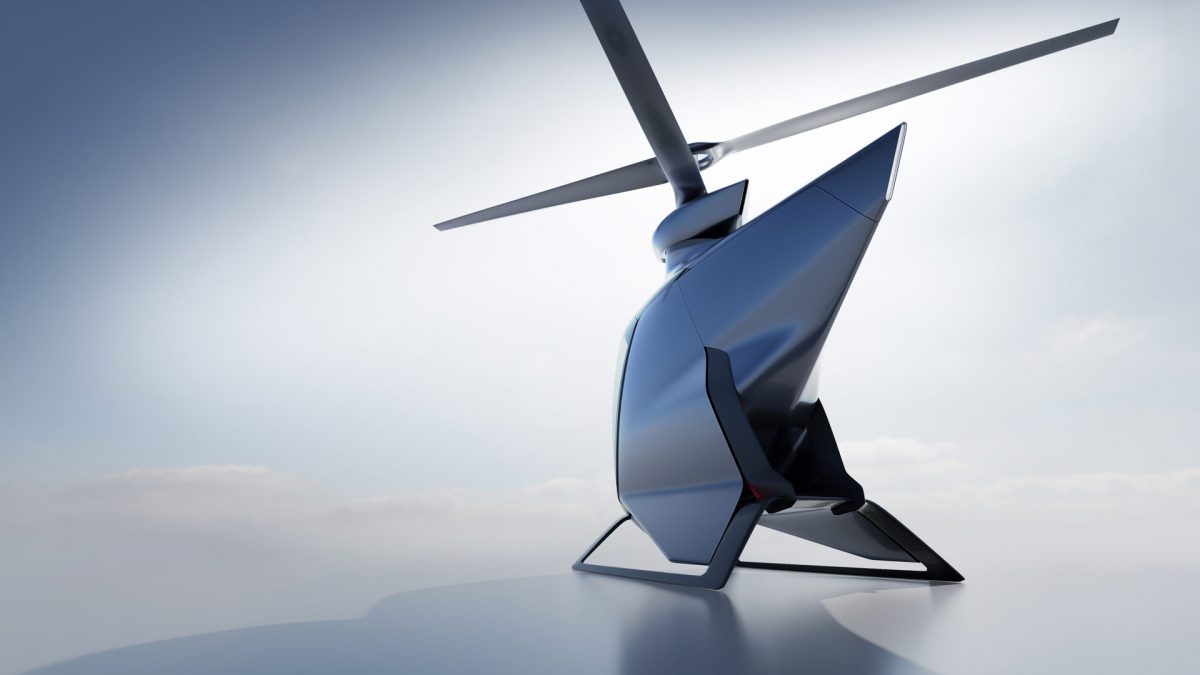
FlyNow’s eCopter lineup sports counter-rotating rotors and is designed for flexibility and efficiency. The family includes single-seater and twin-seater passenger models, as well as a cargo version capable of carrying a standard Euro pallet (up to 200 kg ~ 440 lb). All variants share a modular architecture, which allows for efficient production and easy adaptation between cargo and passenger use. This modularity is key to keeping costs low and scaling production quickly.
Intelligent Simplicity
The eCopters focus on simplicity with a design that minimizes core subsystems, dual-rotating rotors, a cabin, batteries, and electric motors. Lightweight construction reduces material use and battery size, resulting in lower costs and higher efficiency. According to the company, production costs are up to ten times lower than those of competitors, enabling affordable pricing for end users.
Automated, Not Autonomous
FlyNow’s approach to automation is pragmatic and aims for full autonomy. For now, their eCopters use “automatic flying” along fixed, predetermined routes, much like a cable car in the sky, to leverage existing aviation regulations, allowing for faster and more cost-effective certification compared to fully autonomous systems. It also enhances safety and predictability, which are crucial for public acceptance.
Cargo First, Passengers Next
The company’s initial focus is on cargo operations. By deploying cargo eCopters first, FlyNow can minimize regulatory hurdles and prove the technology in real-world logistics before moving to passenger services. The company aims to achieve SAIL IV classification under EASA by 2027, which will enable commercial cargo flights and pave the way for passenger operations.
Safety and Efficiency
FlyNow’s eCopters use a coaxial rotor design for high efficiency, low noise, and robust safety through redundancy. Each rotor is powered by multiple independent electric motors, ensuring safe landings even in the event of a motor failure. Advanced collision avoidance systems are integrated to protect both air traffic and wildlife.
Business Model and Market Vision
FlyNow’s vision is to make urban air mobility affordable for everyone, not just high earners. The company envisions inner-city flights costing no more than a standard taxi ride, with applications ranging from urban commutes to remote deliveries and ship-to-shore transport. Strategic partnerships, such as the recent deal to supply 100 eCopters to Dubai-based Mavi Air, highlight FlyNow’s ambition to scale globally and make a real impact on urban transportation.
Technical Highlights
| Feature | Specification/Detail |
|---|---|
| Max Payload | 200 kg/440 lb (cargo version) |
| Max Takeoff Weight | 570 kg/ 1257 lb |
| Max Speed | 130 km/h ~ 80 MPH |
| Flight Time | 30 minutes |
| Range | 50 km/30 miles |
| Noise Level | <55 dB(A) at 150m/492 ft altitude |
| Emissions | Zero CO2 (battery-electric) |
| Rotor Design | Coaxial, fixed-pitch, electric |
| Certification Path | EASA SAIL II (aiming for SAIL IV) |
FlyNow Aviation stands out with a leadership team blending deep technical and entrepreneurial expertise, and a business model focused on where the demand is. This new wave of AAM 2.0 companies is positioning itself well to bring the potential urban air mobility around the world. Specifically, FlyNow’s focus on cargo operations, intelligent automation, and cost-effective design positions heralds this refocus of urban transportation back to individual mobility.
Stay tuned for more insights from Yvonne Winter on the upcoming episode of our The Ways We Move podcast, where she will share FlyNow’s journey and vision for the future of electric air mobility