

There are more solutions than obstacles. Nicolas Zart
This philosophy—which opens every article I write—proved both powerful and tested in 2025. The year delivered surprises, both welcome and challenging, with twists that reminded us why disruptive technologies require resilience. Yet amid uncertainty in an industry still years from full commercial operations, we found reasons to celebrate progress.
2025 was marked by significant challenges across the broader aviation sector. Runway incursions increased, severe turbulence incidents caused injuries, and a government shutdown created cascading effects still felt months later. I’m personally still waiting to restart my Global Entry renewal after losing access to a five-year-old email address—a bureaucratic frustration many travelers share.
The year began tragically in January when 67 people lost their lives in a midair collision between an American Airlines regional jet and a military Black Hawk helicopter. The NTSB’s subsequent reports raised alarms throughout the industry, yet Congress has not fully addressed the systemic issues revealed by the investigation. Then in November, a UPS cargo MD-11 crash in Louisville claimed killed 14, underscoring ongoing safety challenges.
Air traffic control staffing shortages persisted, with policymakers debating whether artificial intelligence can address chronic workforce gaps. The solution seems obvious to those of us in the industry: hire more controllers, offer competitive salaries, and improve working conditions—not just for decision-makers but across the entire ATC workforce. The flying public is tired of the complications.

Three Flights This Year Only!
It might seem unusual to celebrate flying only three times this year, but after traveling once or twice monthly in 2024, reducing air travel felt like a worthy achievement. My final flight, however, reminded me why many professionals are rethinking frequent flying.
We were told the aging 767-400ER we were on required a new display before attempting a seven-and-a-half-hour flight. Eventually, maintenance discovered that it wasn’t the real problem. The solution? A system reboot. After nearly 50 years of flying, I’d never experienced a jumbo jet requiring a full restart before departure. That was another interesting experience listening to the background noise people make in a very quiet doule-aisle airplane.
The return journey proved even more eventful. Heavy rain in Lisbon meant a non-operational windshield wiper on another 767-400ER was delayed. After waiting over an hour at the gate, the flight was cancelled. The reason was the airline didn’t have spare windshield wipers on hand, understandably so, depsite LIsbon have a full-fledged MRO locally. United flew an empty 767 to Lisbon while our original aircraft remained grounded another day, facing additional maintenance issues. I can only imagine what those of you who fly more frequently experienced this year.
These incidents highlight the aging fleet challenges facing carriers and the maintenance complexities of keeping older aircraft airborne. As for our AAM industry promising revolutionary new aircraft technologies, these reminders of conventional aviation’s struggles provide sobering context.

Over Innovative Mobility Solutions and AAM Land, Things Are Moving Along
Despite these challenges, mobility innovation advanced worldwide. Japan announced that the Nippon Foundation’s new autonomous vessel autonomous passenger ferry, Olympia Dream Seto, to begin commercial operations in March 2026. Operated by Kokusai Ryobi Ferry, the vessel will run daily routes between Okayama city and Shodoshima in Kagawa Prefecture, demonstrating that autonomous transportation is moving from concept to commercial reality—even if not yet in the skies.
This maritime development offers lessons for Advanced Air Mobility: regulatory frameworks can enable autonomous operations when approached methodically, public acceptance grows with demonstrated safety records, and commercial viability improves through operational experience.
The Ways We Move, Over 1,000 Downloads
Perhaps my biggest surprise of 2025 was the success of our new podcast. The Ways We Move launched with a specific mission: to highlight innovative mobility solutions across all transportation sectors and the people behind them. This deliberately niche focus—covering not just AAM but the entire innovative mobility solutions ecosystem—resonated beyond expectations.
In just 11 months, we surpassed 1,000 downloads. For a specialized podcast serving a professional audience rather than mass appeal, this milestone validates the hunger for substantive conversations about transportation’s future. Our listeners include engineers, entrepreneurs, policymakers, and industry professionals who want depth over hype from all over the world.
The podcast’s success reflects a broader shift in the AAM community: maturation beyond promotional events toward educational dialogue. And as to being one of the last three surviving from this year, I feel very honored to be on the saddle today.
Our guests have ranged from Georgia Tech’s Marilyn Smith discussing aerodynamics fundamentals to infrastructure experts like Clint Harper and Rex Alexander sharing operational realities among many of the most well-known stakeholders. Each conversation prioritizes expertise over cheerleading, analysis over prediction, and practical challenges over utopian visions.
We’re always looking for more innovative mobility people working on those imdustries. So make yourself be known. And thank you, again, for making The Ways We Move such a resounding success!

AAM Master Classes, Off to a Great Start
Three years ago, many of us in the AAM sector were experiencing event fatigue. Conferences felt repetitive—same speakers, same optimistic predictions, same surface-level discussions year after year. One a handful of conferences and events were still exciting as they drilled down the trenches of technology. Overall, for the most part of the biggest ones out there, we weren’t learning; we were networking at increasingly expensive gatherings.
Worse, a wave of self-proclaimed experts emerged, leveraging polished presentations and ChatGPT-generated insights but lacking any substantive AAM experience. Some launched training programs that offered breadth without depth, leaving participants with certificates but theoretical knowledge soon to be outdated. The industry needed something different: rigorous, expert-driven education.
After discussing this gap with my trusted professional network, my colleague Nadia Pak and I developed the AAM Master Class concept and later invited another partner. The approach was deliberate: recruit the academics and practitioners we knew and trusted. For that, I created the curriculum that builds systematically from theoretical foundations through practical application, followed by workshops where participants grapple with real problems rather than hypotheticals.

Our inaugural event at Rome International Airport, partnered with UrbanV, exceeded expectations. The feedback was consistent: finally, serious professionals in one room, focused on sober education rather than promotional pitches. Attendees came from as far as South Korea and Peru, bringing diverse perspectives that enriched workshop discussions.
The curriculum structure proved effective. We started with theoretical foundations led by Georgia Tech’s Marilyn Smith, one of the curriculum leads, Adam Cohen’s research, and many more. Marylin’s aerodynamics expertise provided the academic grounding participants needed before moving into practical applications. And Adam’s research for International University helped set the foundations for the course.
We followed the academic introduction with featured real-world infrastructure experience from experts like Clint Harper and Rex Alexander, who also lead the curriculum, as well as Curtis Grad, Sergio Ceccuta, and many more. All bridged academic theory with operational reality in their respective domains—regulatory compliance, engineering integration, and urban planning.
Finally, workshops drove concepts home through practical problem-solving. Watching multinational teams collaborate on infrastructure challenges revealed both universal obstacles and culturally-specific approaches. The cross-pollination of ideas from different regulatory environments and urban contexts created learning opportunities impossible to replicate through lectures alone.
We ended the third day with a visit into the airport
s new backbone control center which was an eye-opener for many of us coming from the US. European airports are managed and owned very differently. Lastly, UrbanV cordially invited everyone to visit their vedrtiport concept center where we were invited to walk through and see a drone demonstration.
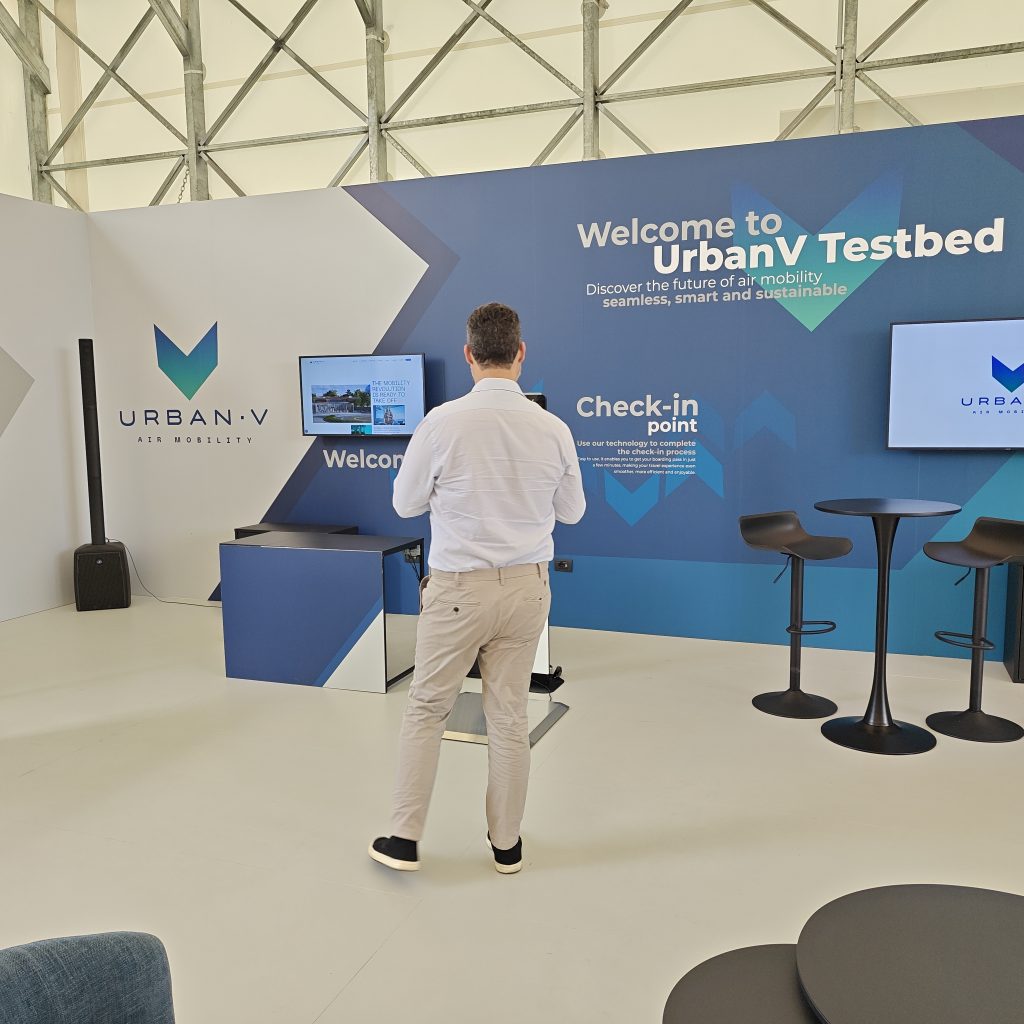
Our next AAM Master Class will take place in Vancouver, Canada. Electric Air Mobility has partnered with Curtis Grad from Modalis to deliver this comprehensive educational program, further the program, and offer more. More details will be announced in early 2026.
2026 At A Glance
Predicting the future remains impossible despite year-end traditions encouraging the attempt. However, some trends are sufficiently established to project with a modicum of confidence.
We can easily predict more mergers, acquisitions, and startup struggles during 2026. This isn’t a controversial prediction—all disruptive technologies follow similar trajectories: initial hype, sobering reality check, early adopter momentum, and eventual commercial maturity. In aerospace, this stretches out over a decade, if not more. The AAM sector remains in the transition between sobering reality and early adoption.
Expect more companies to merge, pivot, or close as capital becomes selective and timelines extend. This consolidation, while painful for affected employees and investors, ultimately strengthens the industry by concentrating resources on viable approaches.
The Big Four Maintain Momentum
Joby Aviation and Archer Aviation will continue their high-profile race, each press release carefully timed to maintain investor confidence and regulatory attention. Their competition, while at times appearing more about perception, drives both companies toward certification milestones.
BETA Technologies will likely maintain its quieter approach, focusing on execution over promotion. Their successful IPO positioning, dual-use strategy serving both commercial and defense markets, and infrastructure development create a diversified foundation less dependent on eVTOL certification timing alone.
Wisk Aero continues developing autonomous eVTOL technology, with Boeing positioned to benefit from breakthroughs. Their patient capital and focus on removing the pilot from day-one operations represent a different timeline but potentially transformative approach.
Watch the Emerging Players
Beyond the frequently-discussed quartet, several companies deserve attention in 2026:
Vertical Aerospace has executed a remarkable turnaround, pivoting from what appeared to be a typical startup decline into renewed momentum. Their strategic reset and partnership developments demonstrate that honest assessment and adaptation can reverse negative trajectories.
Eve Air Mobility emerged from relative quiet with strategic moves, including its relationship with BETA Technologies. As Embraer’s AAM venture, they bring manufacturing expertise and certification experience that many startups lack.
Jaunt Air Mobility and its AERO Group IPO represent another pathway worth monitoring. Their compound helicopter approach offers different performance characteristics than pure eVTOL designs, potentially filling market segments less suited to battery-electric aircraft.
SkyDrive, a company I’ve had the privilege to work closely with since inception, deserves particular attention for its strategic focus on integrating with existing transportation infrastructure. By partnering with railroads and metro systems, they’re addressing the “last-mile” connection challenge that will determine AAM’s practical utility. Their approach recognizes that new aircraft technologies succeed not in isolation but as components of comprehensive transportation networks.
These companies may not generate the press volume of Joby or Archer, but they’re developing crucial market segments and operational approaches necessary for industry-wide success. Innovation often happens at the margins before moving mainstream.
The Road Ahead
As 2025 closes, Advanced Air Mobility remains pre-commercial but progressing. Educational initiatives like AAM Master Classes are building the professional foundation necessary for competent deployment. Media platforms like The Ways We Move are facilitating substantive dialogue beyond promotional narratives. Companies are maturing from concept to certification, from prediction to prototype testing.
AAM challenges remain mostly with regulatory frameworks still developing, infrastructure requirements are largely unmet, especially on the energy side of the equation where no utility nor their energy transportation can meet upcoming demand. Public outreach and desirerability is still remain the near-term goal, backed by carefully developped education, such as Electric Air Mobility’s AAM Master Classes. Progress is happening in the background, away from the limelight, which might explain why so many feel AAM is stalling. It isn’t, especially measured against where the industry stood five years ago.
The philosophy that opens my articles—”There are more solutions than obstacles”—doesn’t promise easy paths or quick timelines. It reflects a mindset: when confronted with obstacles, focus energy on solving rather than lamenting. The AAM industry demonstrated that mindset throughout 2025’s turbulence.
2026 will bring new challenges. The industry will continue maturing, separating viable approaches from wishful thinking, and moving incrementally toward the operational reality we’ve long anticipated.
Happy holidays to everyone working to make Advanced Air Mobility a reality. See you in 2026.
About Electric Air Mobility:
Electric Air Mobility provides in-depth coverage of Advanced Air Mobility, electric aviation, and innovative transportation solutions. Through articles, The Ways We Move podcast, and AAM Master Classes, we serve aviation professionals, infrastructure planners, and industry stakeholders with expert analysis and educational resources.
Connect with us:
- Website: ElectricAirMobility.news
- Podcast: The Ways We Move
- ▶️ Watch on YouTube: https://www.youtube.com/@TheWaysWeMove📺
- 🔊 Apple Podcasts: https://podcasts.apple.com/ca/podcast/the-ways-we-move/id1797599255 🔊
- 🎧 Listen on Spotify: https://open.spotify.com/show/4V0qe3eZqublwn6dasXWCf 🎧
- 🎙️ Amazon Podcasts: https://music.amazon.com/podcasts/cd3349e1-275f-4691-ae38-f1b6a153d5e5/the-ways-we-move 🎙️
- 📻 iHeart Radio: https://www.iheart.com/podcast/269-the-ways-we-move-268614085/ 📻
- 🌱 Buzzsprout: https://thewayswemove.buzzsprout.com/ 🗣️
- AAM Master Classes: Nicolas@ElectricAirMobility.com