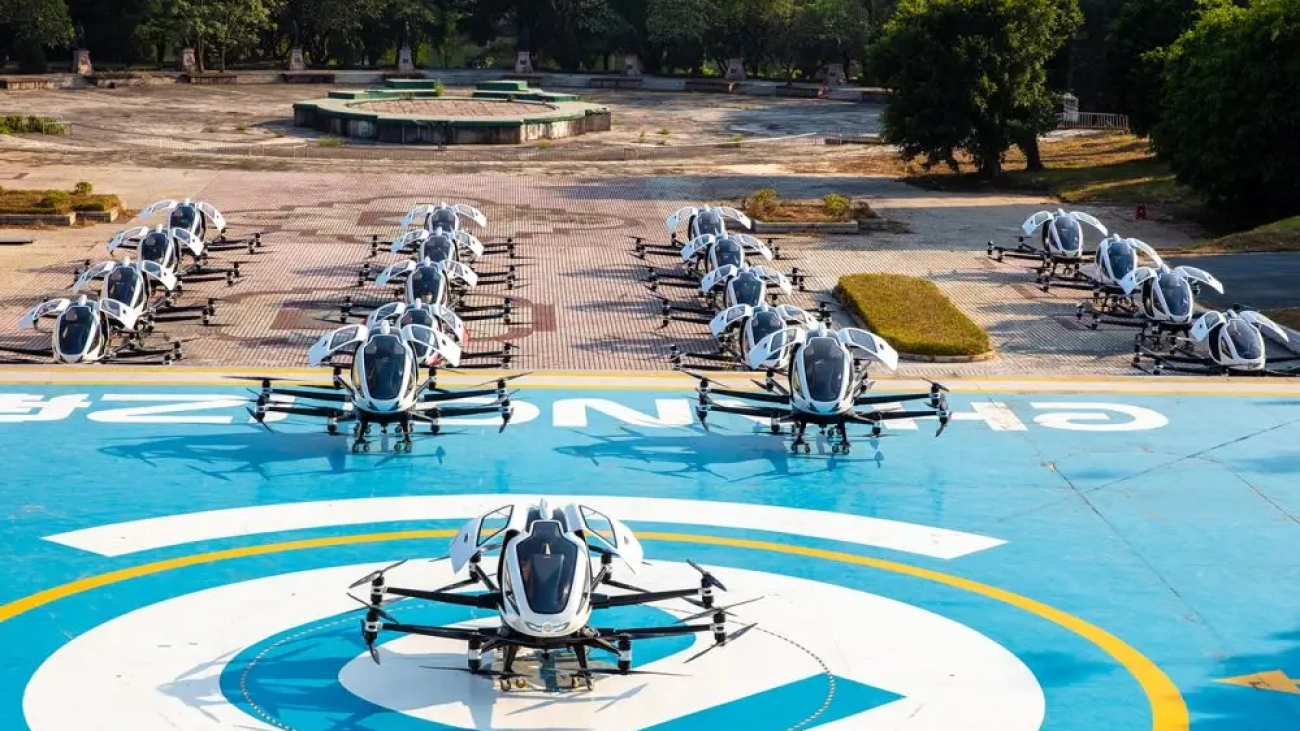
In the largest organizational overhaul in FAA history, Transportation Secretary Sean P. Duffy and Administrator Bryan Bedford announced a comprehensive restructuring that creates a dedicated Office of Advanced Aviation Technologies for eVTOLs, drones, and supersonic aircraft. The January 27, 2026 announcement elevates advanced air mobility to top-level status alongside traditional aviation operations, signaling that electric vertical takeoff and landing aircraft are no longer experimental but core to America’s aviation future. With multiple eVTOL manufacturers approaching certification, the eIPP launching in 2026, and the 2028 LA Olympics showcasing urban air mobility, the timing is critical. This analysis explores what the reorganization means for AAM stakeholders, certification timelines, infrastructure development, safety oversight, and the path to commercial operations.

The EU Sustainable Transport Investment Plan Positively Impacts AAM
The EU’s Sustainable Transport Investment Plan directs nearly €3 billion toward SAF and e‑kerosene. Beyond fuels, it defines the energy and investment environment in which Europe’s Advanced Air Mobility ecosystem will grow.
Joby, Archer, Vertical in 2026: Who’s First? (And Why Past Predictions Keep Missing the Mark)
Five years ago, eVTOLs were ‘coming in 2025.’ Now it’s 2026. Joby, Archer, Vertical race for FAA certs—but energy infrastructure, not airframes, holds the real key.
The Ways We Move: Oscar Lara on Future of eVTOL
Veteran aviation expert Oscar Lara joins The Ways We Move podcast to demystify eVTOL’s future: from blending fixed-wing efficiency with VTOL flexibility, to navigating FAA certification hurdles and building vertiport infrastructure. Essential listen for AAM stakeholders. Watch now: https://youtu.be/HiTHqGd3MFs
Advanced Air Mobility in 2026: Certification, Corridors and Capital
Advanced air mobility shifts from prototypes to operations in 2026. Joby enters FAA test flights, Archer eyes Miami routes, Eve secures US funding, and vertiports face power constraints.
Advanced Air Mobility’s Innovation Paradox: Why Use Old Business Models
Everyone in Advanced Air Mobility knows the truth: we’re developing revolutionary electric aircraft using century-old business models. People leave traditional aviation frustrated, join AAM startups promising change, then fall right back into the same patterns. The technology works—electric aircraft are proven 2-3x more efficient than conventional aircraft. So why do we keep choosing outdated frameworks? Explore what really holds AAM back and what needs to change.
FAA’s Part 108 BVLOS Rule: Low‑Altitude Aviation Needs More
The FAA’s Part 108 BVLOS proposal would finally move drones beyond the slow, waiver‑based system of Part 107, creating a framework for routine flights at scale. But aviation groups like NBAA, VAI, and EAA argue that unclear right‑of‑way rules, heavy paperwork, and weak detect‑and‑avoid requirements could shift risk onto helicopters, GA, and future AAM operations that already rely on the same low‑altitude airspace.
How Holistic Cybersecurity Should Look in Advanced Air Mobility
Cybersecurity is rapidly becoming one of the most critical challenges for advanced air mobility. In this episode, AJ Khan of Vehiqilla explains why a holistic, ecosystem-wide approach is vital to protect fleets, infrastructure, and passengers in a world where every connection is a potential risk.
FAA’s New Radio Altimeter Rules: What They Mean for Advanced Air Mobility and 5G
The FAA has released a proposed rule that would require most U.S. aircraft to upgrade their radio altimeters to withstand 5G interference. This change will affect not only airlines and business jets, but also future advanced air mobility (AAM) aircraft that rely on precise low‑altitude height data for safe urban operations.
EHang VT35: How China’s New Long‑Range eVTOL Changes the Game
EHang’s VT35 is more than a new airframe; it is the long‑range link that turns today’s EH216‑S urban air taxi routes into a wider, intercity network. With a 200 km design range, compatibility with existing vertiports, and strong backing from Hefei’s low‑altitude economy strategy, the VT35 shows how China plans to scale autonomous passenger eVTOLs from sightseeing flights to everyday regional transport.