
There are more solutions than obstacles. Nicolas Zart
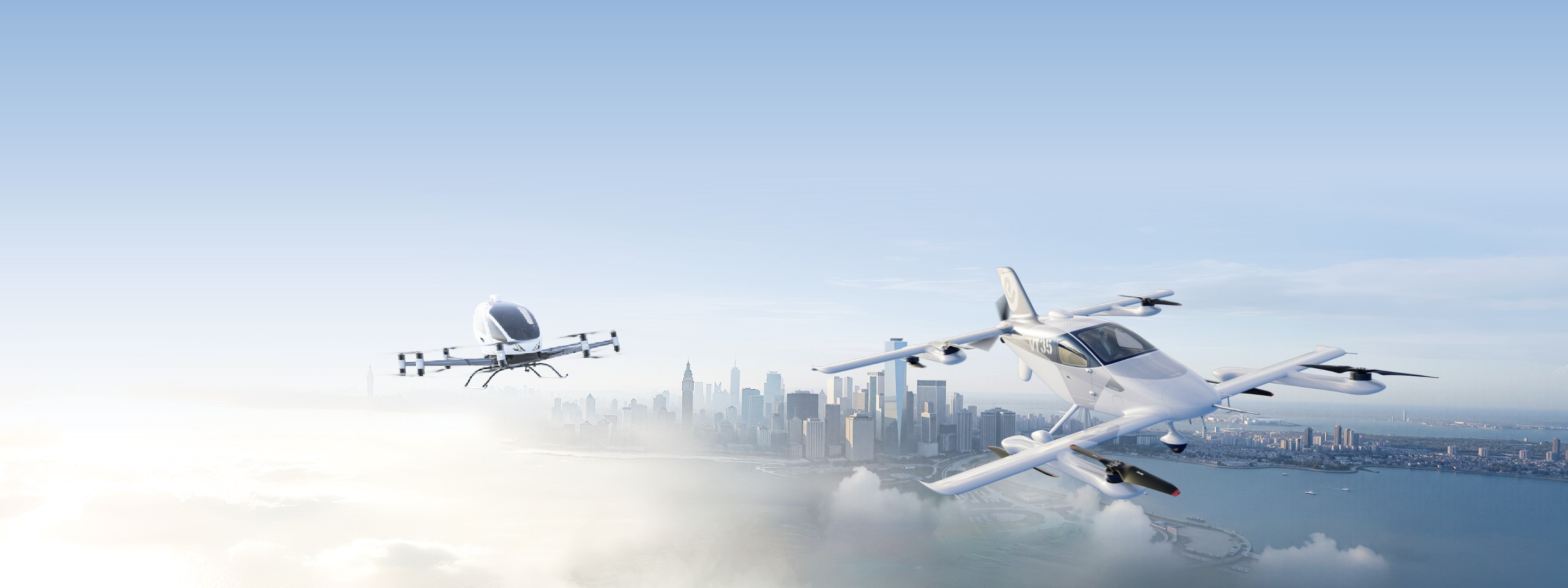
The launch of EHang’s VT35 in Hefei may look like another aircraft reveal, but it actually marks a quiet turning point in how the company sees the future of mobility. On paper, this two‑seat autonomous eVTOL with a 200‑kilometer (~ 125 miles) design range and a price tag of around 6.5 million RMB (roughly $950,000). In practice, it is the missing piece between today’s short urban hops and tomorrow’s regional, low‑altitude air networks.
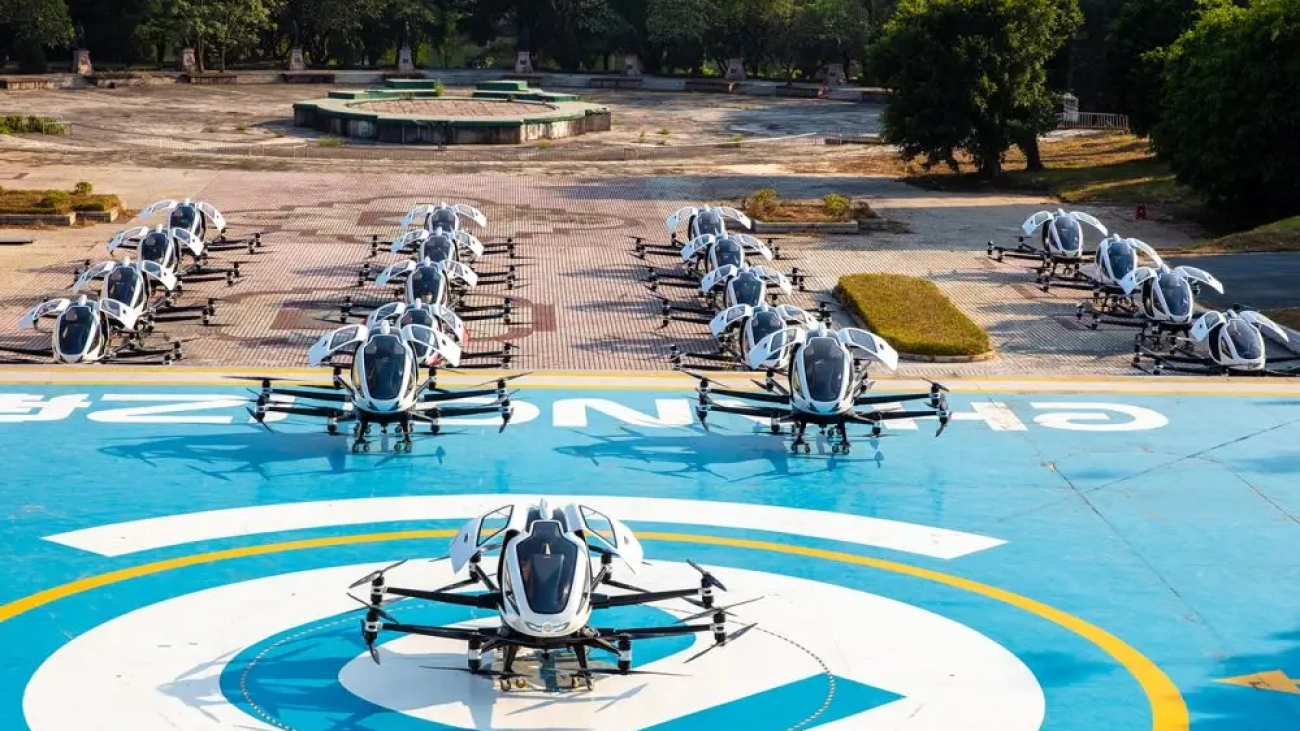
EHang’s Chinese-certified EH216‑S defined the company’s story. The multicopter has room for two passengers and is fully autonomous, flying a 25 to 35 kilometer range (~ 15 to 20 miles). This makes it ideal for private use as well as sightseeing and short urban shuttles. If you are interested and are visiting China, you can book a flight in several Chinese cities. As of today, the company holds the world’s first air operator certificate for commercial pilotless eVTOL passenger services.
EHang’s Bet on the New VT35 eVTOL
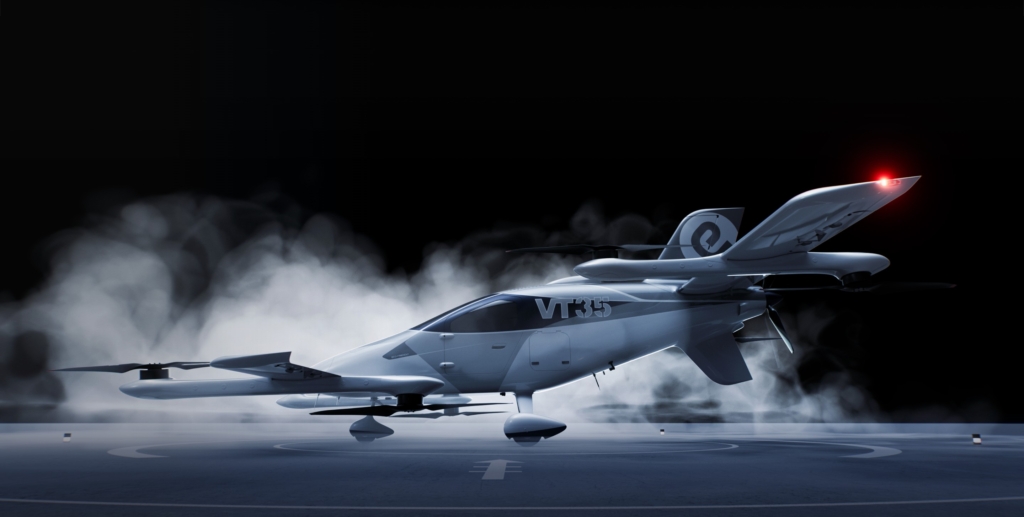
The new VT35 electric vertical take-off and landing (eVTOL) aircraft is designed to move into a sixfold operational envelope. The lift‑and‑cruise aircraft uses eight distributed lift propellers for vertical takeoff and landing with a pusher propeller with wings. Its 8‑meter wingspan, 3‑meter height, and a maximum takeoff weight of about 950 kilograms make it compact to use the same vertipads already built for the EH216‑S.
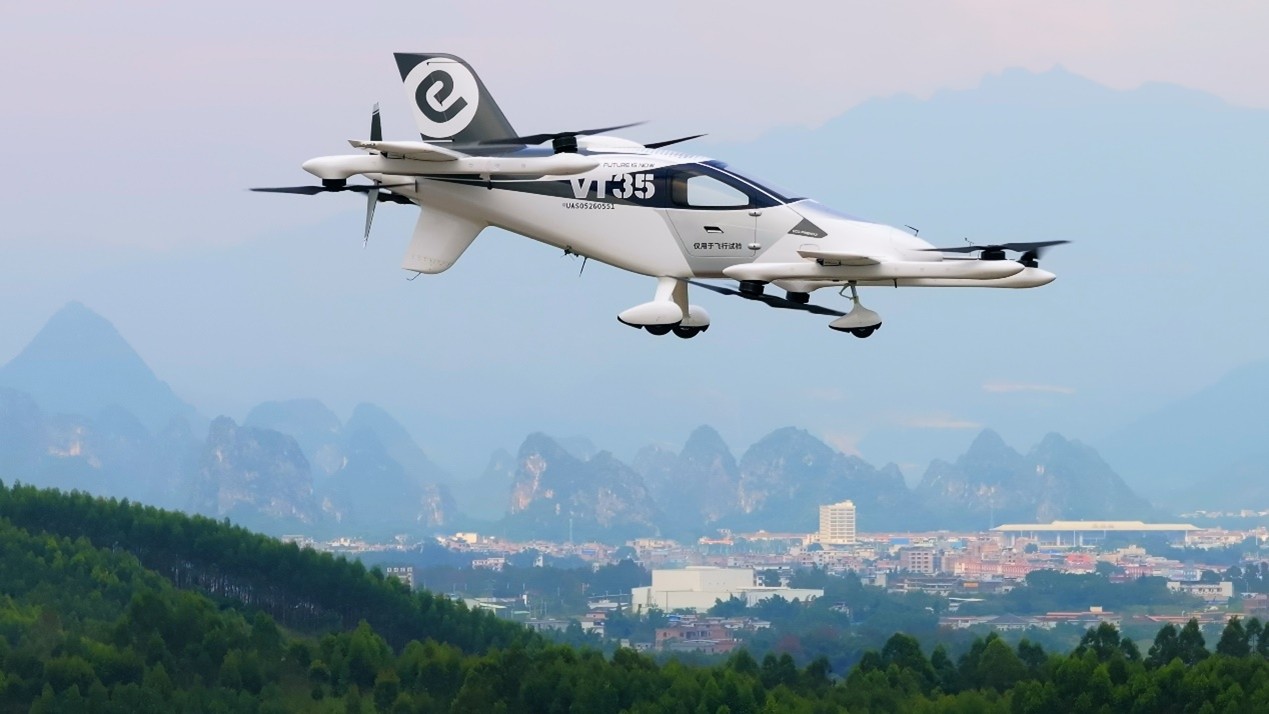
In other words, the VT35 doesn’t require larger and newly built infrastructure. The company says its vision is that of “one‑hour air mobility living circles” connecting dense metropolitan clusters. Think of the Yangtze River Delta, the Pearl River Delta, and the Beijing‑Tianjin‑Hebei regions. It hopes to turn the same places that take a 20‑minute sightseeing loop today into gateways of 200‑kilometer, city‑to‑city routes.
The Hefei municipal government signed an investment agreement to host the VT35 series production hub, and a government‑owned company has placed initial orders. In September, the city released a Low‑Altitude Economy Development Scenario White Paper that lays out concrete use cases, policy tools, and infrastructure plans for aircraft like the VT35. Luogang Central Park, redeveloped on the grounds of Hefei’s former airport, already functions as a testbed with an urban air mobility hub that handles ticketing, boarding, and maintenance for eVTOL services.
AHang and The Low‑Altitude Economy
The “low‑altitude economy” in China is not just a buzzword but a full-fledged government vision. Aviation regulators project that commercial activities below 3,000 meters could reach 1.5 trillion yuan (~$ 214 billion) in value by last year, more than doubling by 2035. The VT35 sits between where traditional ground transportation is slow, regional jets are too heavy, and helicopters are too costly. A fleet of pilotless, two-seat eVTOL with point-to-point capabilities can serve tourism, business travel, and medical or emergency links between secondary cities, coastal islands, and mountain communities.
At the eVTOL USA 2025 event in Palo Alto, EHang CFO Conor Yang framed this as a step from pioneering to scalable systems. He highlighted how lessons from the EH216‑S certification and more than 76,000 autonomous flight sorties worldwide are being carried over to new models like the VT35. In his view, long‑range aircraft that plug into proven vertiport infrastructure and fleet‑management software will be key to making autonomous air mobility a routine mode of travel rather than a premium novelty.

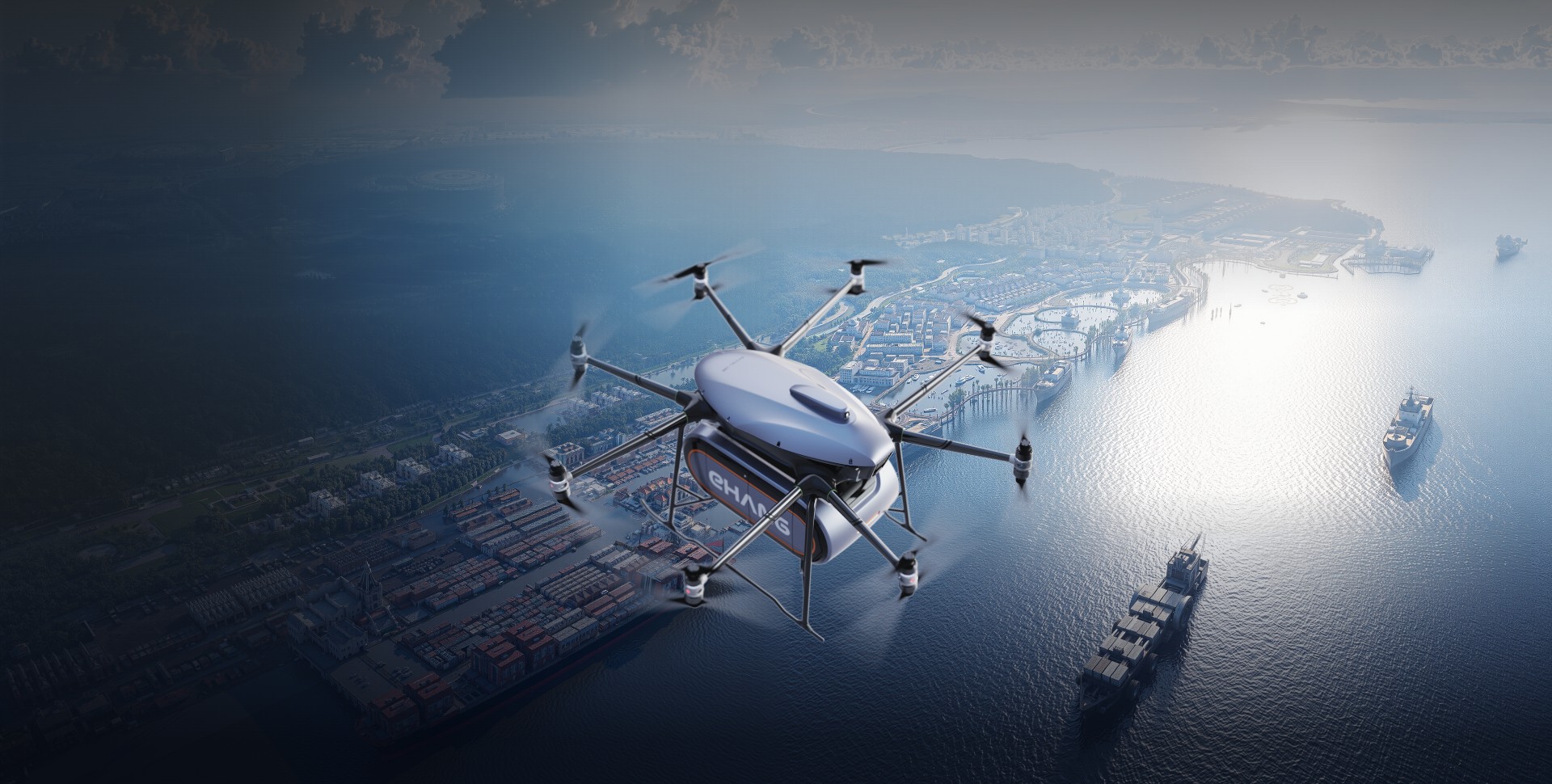
That perspective also helps explain EHang’s broader lineup. Alongside the VT35 for passenger intercity missions and the EH216‑S for urban services, the company is developing the VT20 drone for cargo, targeting logistics and freight in the same low‑altitude corridors. Taken together, these aircraft sketch out a layered network: small drones and cargo eVTOLs handling goods, short‑range multicopters serving city centers, and longer‑range lift‑and‑cruise vehicles bridging cities in a one‑hour flight radius.
Of course, much depends on certification and public desirability. The Civil Aviation Administration of China has accepted EHang’s application for a type certificate for the VT35, and the aircraft is now undergoing ground and flight tests, including transitions between vertical and horizontal modes. There is no public date yet for full approval, but EHang aims to leverage the regulatory path and operational experience it has already established with the EH216‑S to shorten the timeline.
From a systems perspective, the VT35 is important less because of any single specification and more because of how it extends the reach of an existing, working ecosystem. It shows that autonomous eVTOLs are starting to grow horizontally—across real regions and real economies—rather than just vertically in marketing slides. For anyone tracking how advanced air mobility will actually integrate into daily life, that is the shift to watch.
What is happening with certification
- China’s Civil Aviation Administration (CAAC) formally accepted EHang’s type certificate application for the VT35 in early 2025, and the aircraft is now undergoing airworthiness certification with ground and flight testing.
EHang plans to conduct most of this certification work in Hefei and has stated its goal is to obtain a type certificate, production certificate, and standard airworthiness certificate from the CAAC for the VT35, mirroring what it has already achieved for the EH216‑S.
What is not happening (yet)
- None of EHang’s VT35 announcements or investor updates mention an active FAA or EASA type‑certification program for this model; they only reference the CAAC.
Commentary on the VT35 generally contrasts China’s faster CAAC pathway with a more cautious, still‑in‑development eVTOL framework at the FAA and EASA, and does not list VT35 among aircraft currently in Western certification pipelines.
So far, EHang’s VT35 certification is currently focused only on China’s CAAC, with no public FAA or EASA programs announced so far.